Book A Free Demo
Book A Free Demo
Face Recognition Time Clock Software
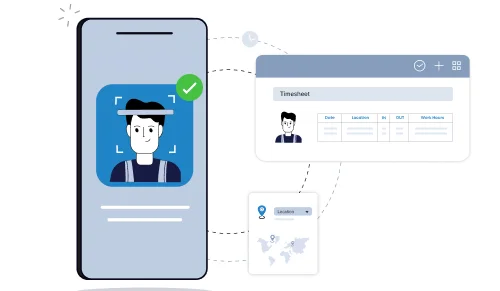
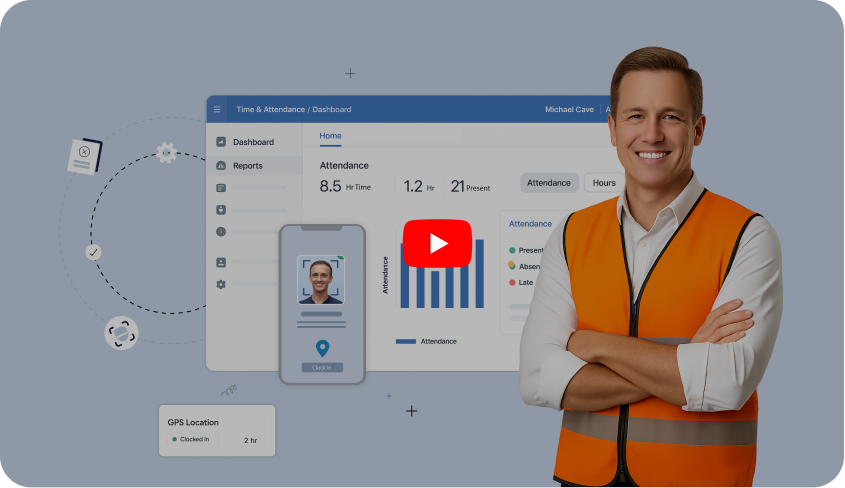
Truein verifies a worker's face and GPS location together at every clock-in, on any Android or iOS device. If the face does not match, the punch does not go through.


Trusted by Workforces Across Industries


Feature Overview
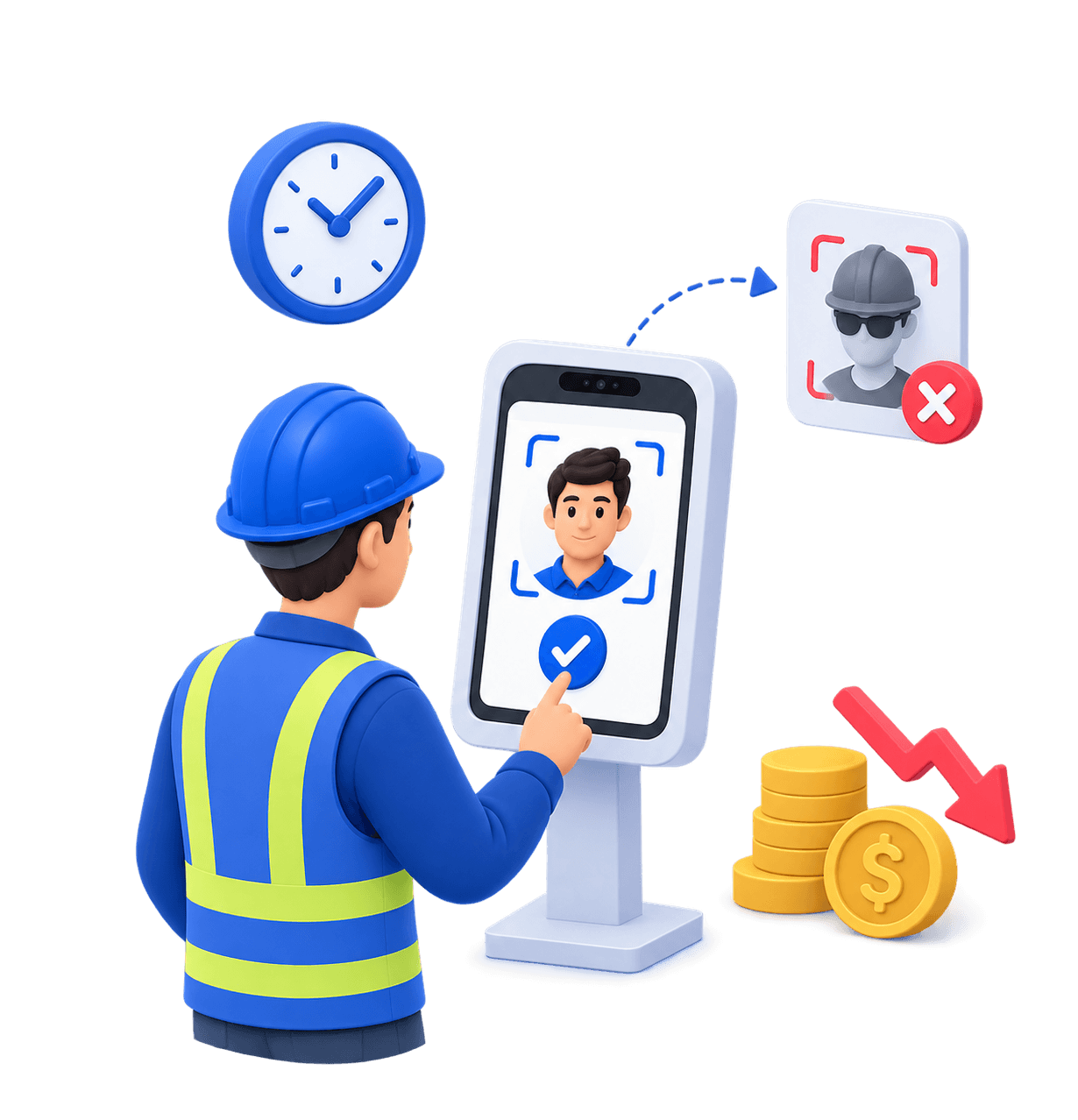
Truein is a face recognition time clock system built for hourly and multi-site workforces. It verifies a worker's face and GPS location at the moment of the punch, on any Android or iOS device, so one worker cannot clock in for another.
Buddy punching works because most time clocks record a punch without proving who made it. A PIN gets shared, a badge gets handed over, and a spreadsheet accepts whatever the timesheet says. Truein removes the credential entirely.
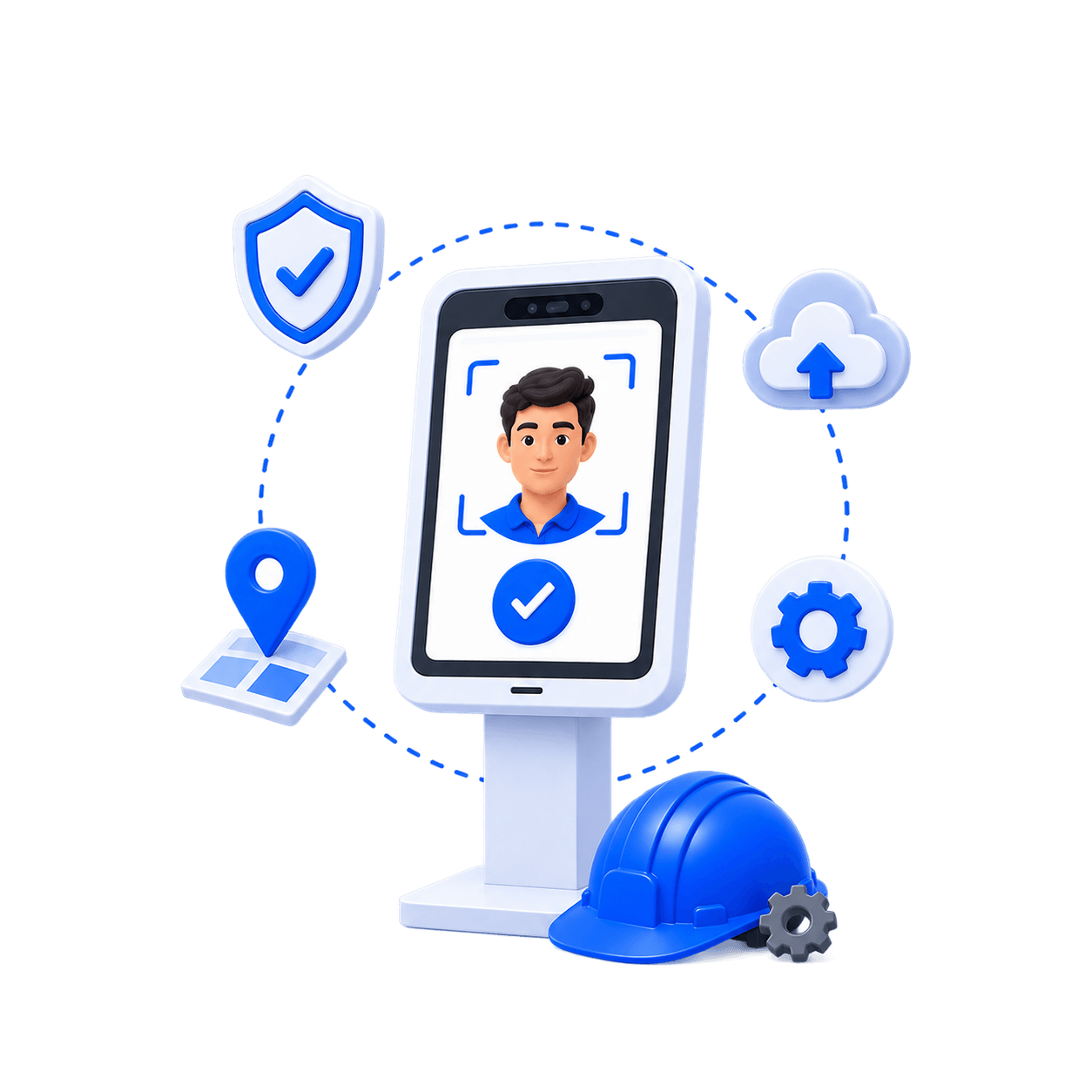
Three checks on every punch:
Most time clocks handle one of these. A few handle two. Truein is built around all three.
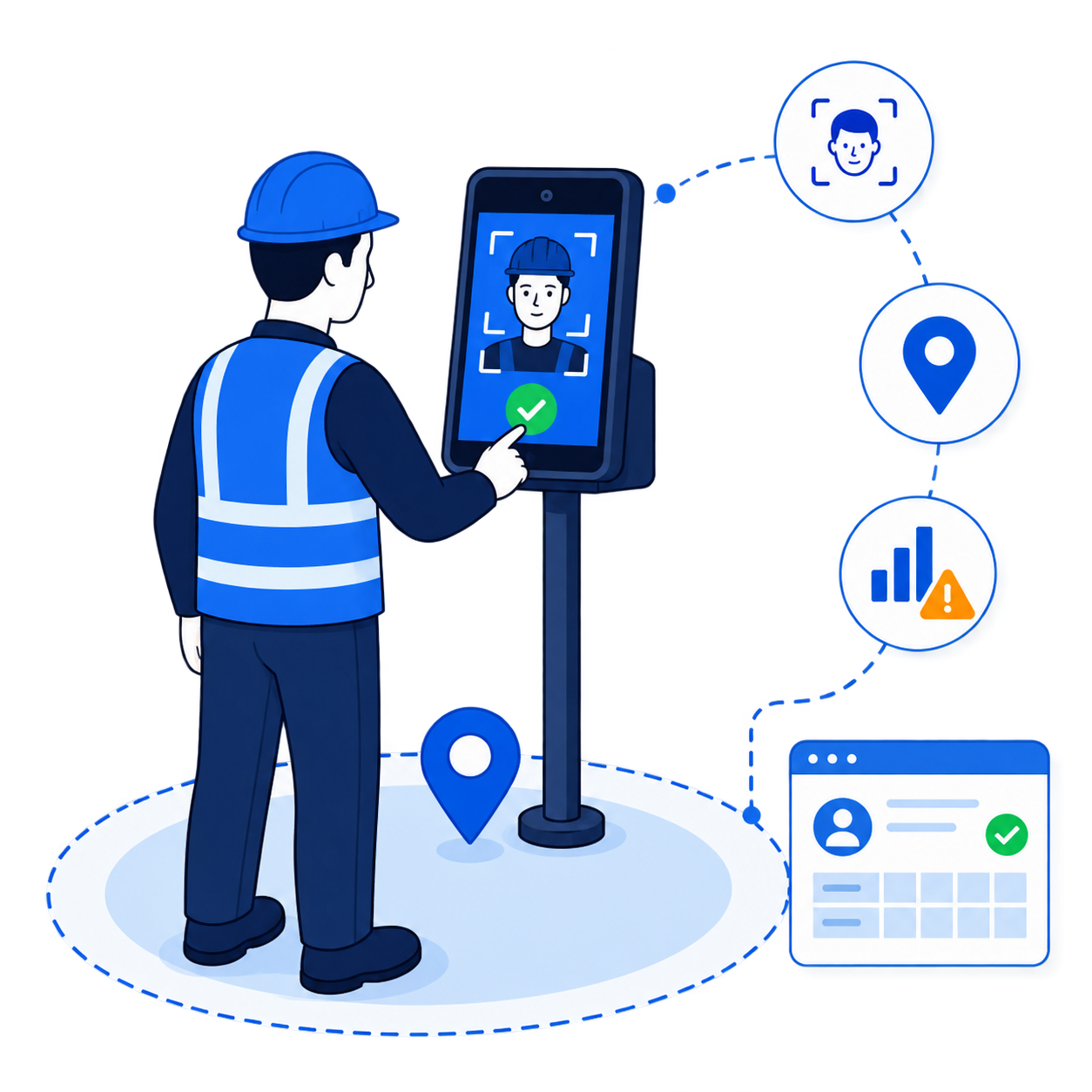
One worker knows three PINs. The crew rolls in at 7:04 and the timesheet says 6:55 for all of them.
Truein replaces the credential with the face, so there is nothing left to share.
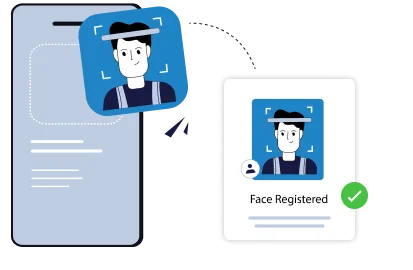
 Face matched at the moment of the punch
 Failed match blocks the entry on the spot
 No PINs, badges, or cards to hand over
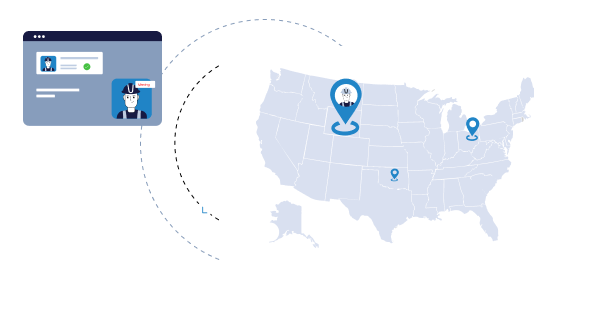
The punch lands from a truck two miles out, or from a couch.
GPS geofencing ties each punch to the boundary you draw around the site.
Configurable radius from 20 meters per site, floor, or zone
Out-of-boundary punches blocked, alerted, or sent for approval
Location captured at the punch by default
Supervisor-assisted clock-in is useful. Unverified supervisor-assisted clock-in is a blank check.
Truein verifies each worker's face even when a supervisor runs the device.
Worker identity verified by face, not device
Every punch attributed to the individual, not the crew
Full audit trail on every entry

Three agencies bill for crews on the same project and nobody can prove who was actually on site.
Truein gives you the visibility and controls to separate agency staff from your own.
Per-agency headcount limits
Scoped dashboard access for each agency supervisor
Agency-specific policies, pay rates, and document expiry tracking

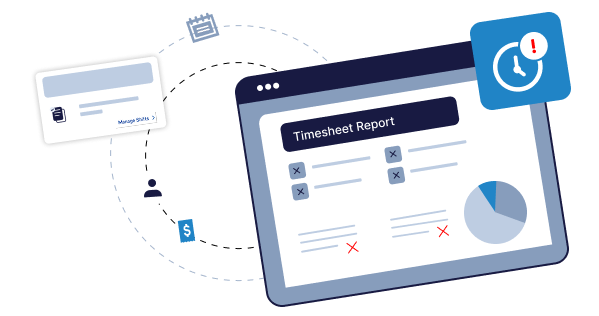
Hours get reconstructed from memory on Friday, corrections pile up, and payroll pays for the guesswork.
Truein replaces spreadsheets and manual timesheets with structured, verified time data.
Verified punches flow straight into timesheets
Approval workflow across every site
Payroll-ready exports every cycle

Benefits

A failed face match blocks the punch. It does not file a photo for someone to review on Friday.

Risk signals surface as flagged exceptions, so managers review the outliers instead of every timesheet.

Any Android or iOS phone or tablet becomes a clock-in point. New sites go live in minutes.

Face answers who. GPS answers where. Truein checks both on the same punch.

Around 95 to 100% accuracy with hard hats, masks, facial hair, and changed hairstyles.
Book a walkthrough and see what changes when every clock-in is tied to a verified face at a verified job site.
Book A Demo








Truein's AI matches the worker's live face to their enrolled profile before the punch is written. If it does not match, the punch is blocked and the worker is prompted to retry. Accuracy runs around 95 to 100%, including with facial hair, masks, hard hats, and changed hairstyles, which matters when a crew shows up in full PPE.
Truein also runs spoof detection on captured punches. In the default configuration, suspicious punches are flagged after capture, the record is marked for review, and the worker can be blocked from further punches.
Quick FAQ’s


Face verification answers who. GPS geofencing answers where. Truein supports a configurable geofence radius starting at 20 meters, roughly 65 feet, and each site, floor, wing, or zone can be fenced separately, which suits open job sites, campuses, and outdoor work.
Enforcement is yours to configure. An out-of-boundary punch can be blocked outright, allowed with an alert to the supervisor, or routed for approval, so different crews can run different rules under one account.
Quick FAQ’s
No. Truein runs on standard Android and iOS smartphones and tablets. There are no fingerprint scanners to buy, no wall-mounted terminals to procure, and no IT ticket to open before a new site goes live.
Mix them. A general contractor can run a kiosk at the main gate, personal-device punches for subs working across the building, and supervisor-assisted clock-in for a day crew, all on one account.
Quick FAQ’s

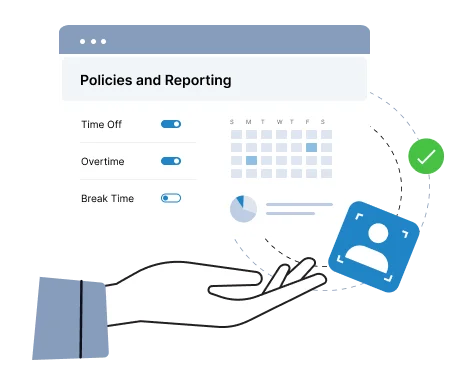
Face and GPS verification stop fraud at the moment of the punch. AI TimeGuard, Truein's built-in anomaly detection, continuously reviews time data across every site and flags impossible travel sequences, identical clock-in timing across workers, geofence edge anomalies, abnormal overtime spikes, frequent timesheet corrections, and payroll-impacting edits.
Managers review the flagged exceptions rather than reading every timesheet. AI TimeGuard surfaces risk signals for human review; it does not guarantee a fraud-proof payroll.
AI Analytics sits alongside it, answering questions about attendance rates, overtime patterns, and correction frequency across sites without anyone building a report.
Quick FAQ’s
Basements, elevator shafts, early-stage sites before connectivity is run, rural and remote work. Attendance capture never depends on network availability. Truein records the clock-in on the device, stores it locally, and syncs automatically when the network returns. Records captured offline are flagged as such so supervisors know what they are looking at.
One thing to be clear about: an offline punch appears in the dashboard after it syncs, not before. Real-time visibility applies to connected clock-ins.
Quick FAQ’s


Every tool below records time. They differ on what happens at the moment of the punch.
Truein is the option that verifies identity at the punch on both personal devices and shared kiosks, and reviews punch patterns across every site before payroll runs.


Truein is robust, reliable, and works as promised. I have implemented Truein in my previous and current companies. It's the best and most cost-effective solution.

Piyush Dutt
CPO, Compass Group
1200+
Sites
40,000+
Staff
Truein is a highly accurate, multipurpose, and user-friendly solution. It detects fake clock-ins and covers all the modules.

Sujit Pawar
DGM, OCS Group
100+
Sites
4000+
Staff
Moving from thumb-based attendance system to a Face recognition based time and attendance solution was made easy by the Truein team.

Srinivas G
Sr. HR Manager, Tata 1mg
200+
Sites
4000+
Staff
We are using Truein Time and Attendance system at our 80 sites for over 10,000 staff. Truein has built-in customization options and gives multiple real-time reports.

Girish Nimbalkar
AGM HR, SJ Contracts
80+
Sites
10,000+
Staff


Truein has helped Jumia a lot, not only in tracking attendance and work hours but also measuring productivity and calculating the payout for external employees.

Alaa Hassan
Head of Ops Excellence, Jumia
Pleased with Truein for its accuracy and ease of use in tracking the attendance of our staff. Truein team is always ready to assist us. Highly recommend it!

Nagham Nasr,
Payroll Officer, Reyada
This face detection time & attendance software is very effective at our construction company. Full marks to Truein and their support team!

Wajahat Khan
Payroll Admin, Al Magamsi General Contracting
Truein is robust, reliable, and works as promised. I have implemented Truein in my previous and current companies. It's the best and most cost-effective solution.
Piyush Dutt
CPO, Compass Group
Truein outshines all other time and attendance solutions. Its rich features, payroll ready timesheets and centralized controls put it in a class above all.

Carlos Woodson
Phoenix Transload Services
Truein is a perfect solution for tracking time of our temp workers. It has Excellent support and user-friendly system.

Nicolous Noble
Payroll Administrator, Backerhaus Veit
Truein has strengthened our Time & Attendance accuracy and quality, ensuring compliance and trust among end-users. Excellent product!

Henry Carrillo
Farm Administrator, Unispice
Truein is robust, reliable, and works as promised. I have implemented Truein in my previous and current companies. It's the best and most cost-effective solution.
Piyush Dutt
CPO, Compass Group





G2 4.8/5 from 95 reviews · Capterra 4.8/5 from 42 reviews
Book a demo and we will walk through your sites, your crew mix, and your payroll setup.
Book a demo and we will walk through your sites, your crew mix, and your payroll setup.
Book A Demo"Face recognition" covers three different mechanisms, and they do not do the same job.
What to check before you commit:
The fastest question in a vendor demo: show me what happens when a worker whose face does not match tries to punch. If the answer is that it gets saved for review, you are buying documentation, not prevention.
Buddy punching is when one worker clocks in or out on behalf of another who is not there. It is the most common form of time theft in hourly workforces, and it is close to invisible in paper, spreadsheet, PIN, and badge systems, because all of those record a punch without proving who made it.
It usually starts small. A crew member running late texts a coworker. Nobody thinks of it as fraud. Then it becomes routine, and the cost compounds quietly until someone reconciles a payroll cycle against the actual site headcount.
The American Payroll Association, now PayrollOrg, reports that about 75% of U.S. businesses are affected by buddy punching, and analysis from Nucleus Research puts the cost near 2.2% of gross payroll at affected companies. On a $5 million annual payroll, that is roughly $110,000 a year.
The pattern is consistent across job sites: shared credentials at the gate, punches from off site, a supervisor clocking in a crew that has not fully arrived, and subcontractor headcount nobody can verify.
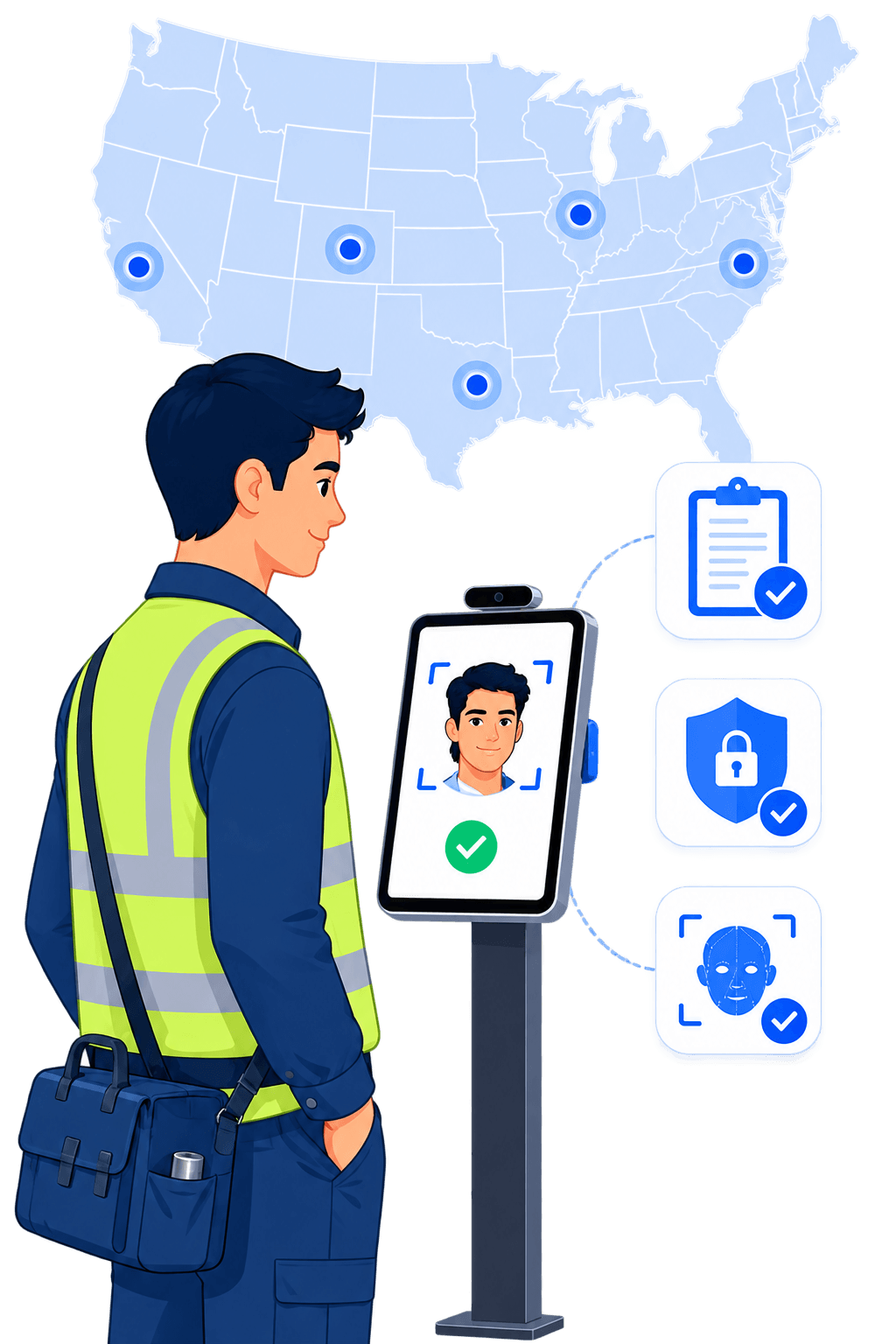
Yes, when it is deployed with consent. Truein uses consent-first enrollment, so workers are informed before any face data is captured. That makes the technology biometric consent-compliant by design rather than a legal gray area.
Five states have biometric consent requirements that apply directly to workplace time and attendance.
California. The employee exemption under the CCPA, as amended by the CPRA, expired on 1 January 2023. California employees now hold full notice, access, and deletion rights over biometric data collected at work, including for time and attendance. Any company with California sites should treat this as an active consideration rather than a future one.
Illinois. The Biometric Information Privacy Act (BIPA) requires written consent before biometric data is collected and, unlike most state biometric laws, lets individuals sue directly. That private right of action is why BIPA carries more practical risk than any other statute on this list.
Texas. The Capture or Use of Biometric Identifier Act (CUBI) requires a company to inform employees and obtain consent before capturing biometric identifiers, including a record of face geometry, for a commercial purpose. Enforcement sits with the Texas Attorney General only, with civil penalties of up to $25,000 per violation.
Washington. RCW 19.375, the Washington Biometric Privacy Act, requires notice and consent before a company enrolls a biometric identifier in a database for a commercial purpose. It is enforced solely by the Washington Attorney General through the state's Consumer Protection Act.
Colorado. HB 24-1130, effective 1 July 2025, requires employee consent before biometric identifiers are collected for employment use, a written retention and deletion policy, and deletion within 24 months of an employee's last interaction unless a statutory exception applies. Time and attendance is a permitted use when those requirements are met.
How Truein supports this: consent-first enrollment, so workers are informed before any face data is captured.












Hey there! I'm Aby! Schedule a demo to implement centralized time and attendance solution for multi-site workforce.
Hey there! I'm Aby! Schedule a demo

Schedule a demo with a Truein Solution Expert

58+
Global companies booked a Truein demo last week