Book A Free Demo
Book A Free Demo
Construction Time Clock Comparison






For construction crews, Truein is the strongest fit for multi-site contractors and subcontractor crews that need a live face match on standard phones or a shared tablet. SmartBarrel suits remote sites needing rugged, self-powered hardware. Workyard and busybusy fit crews where job costing leads. Jibble works for lean crews on a budget. The deciding question is not whether a tool has "facial recognition." It is whether the tool matches the face against an enrolled template at the moment of the clock-in, or simply captures a photo for a supervisor to review later.
Track attendance, monitor sites, and run payroll — without the manual effort.

Track crew attendance across every job site in real time

Get accurate attendance data and payroll-ready reports

Stop revenue loss caused by time theft and subcontractor overbilling

Monitor every site, shift, and crew from one dashboard

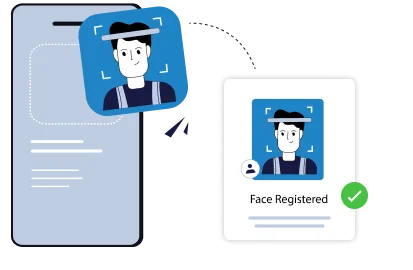
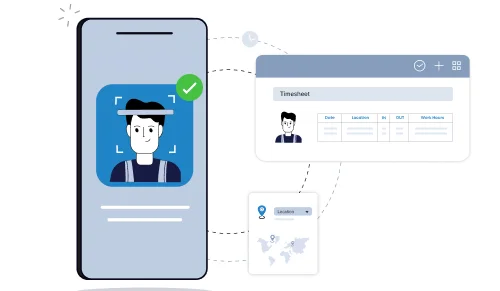
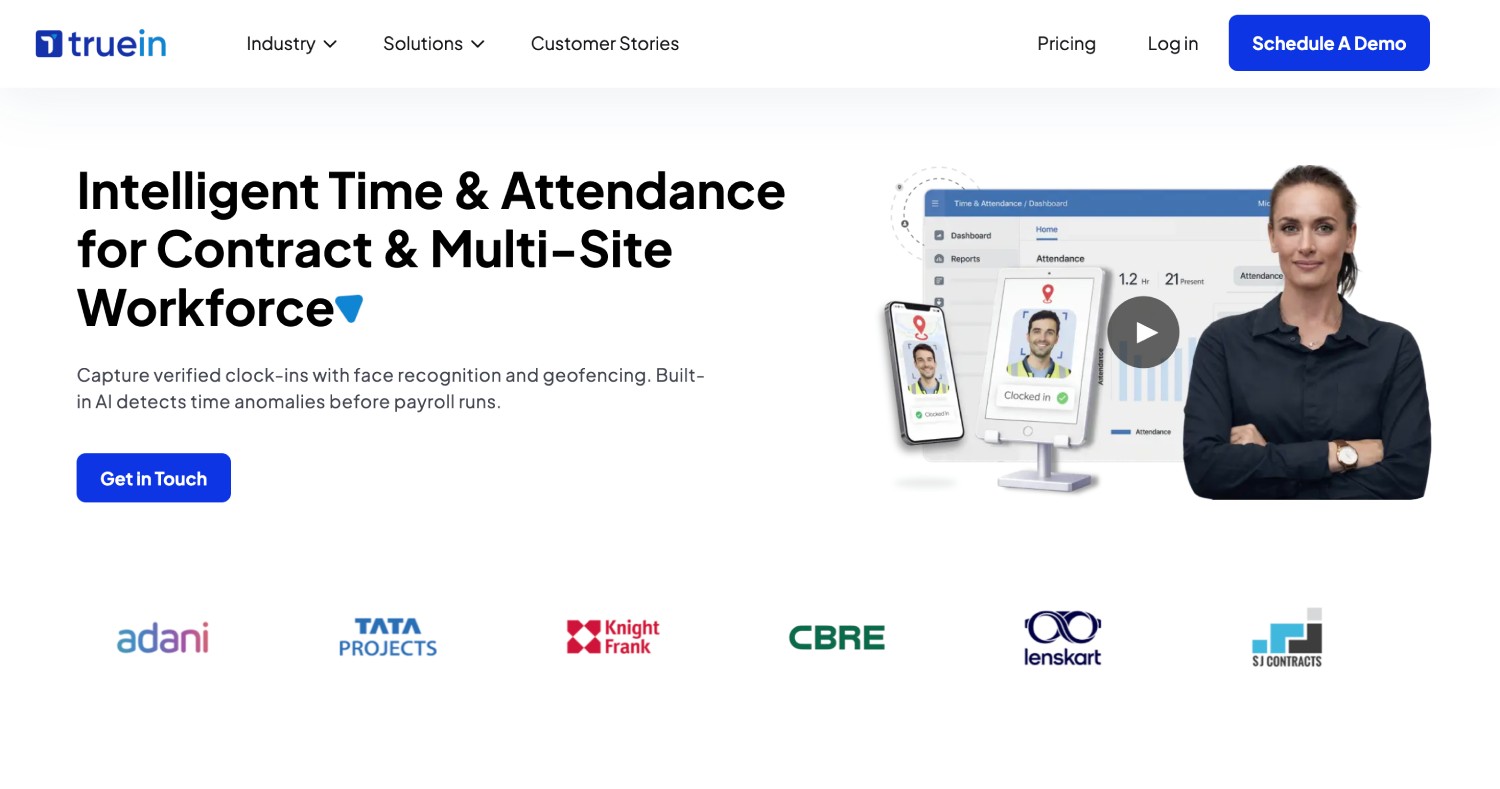
Truein turns any Android or iOS phone or shared tablet into a construction time clock. Every clock-in runs a live face match against the worker's enrolled face, and a failed match blocks the clock-in on the spot and prompts a retry. GPS geofencing ties each clock-in to the job site, and offline capture keeps recording when the site has no signal. Purpose-built for hourly and multi-site workforces rather than desk teams.
Built for construction and field service trades, with detailed site boundaries, GPS breadcrumb tracking, and labor cost allocation by job. Identity checking is handled through photo and face verification on supported clock types rather than a uniform biometric match across every clock-in mode.
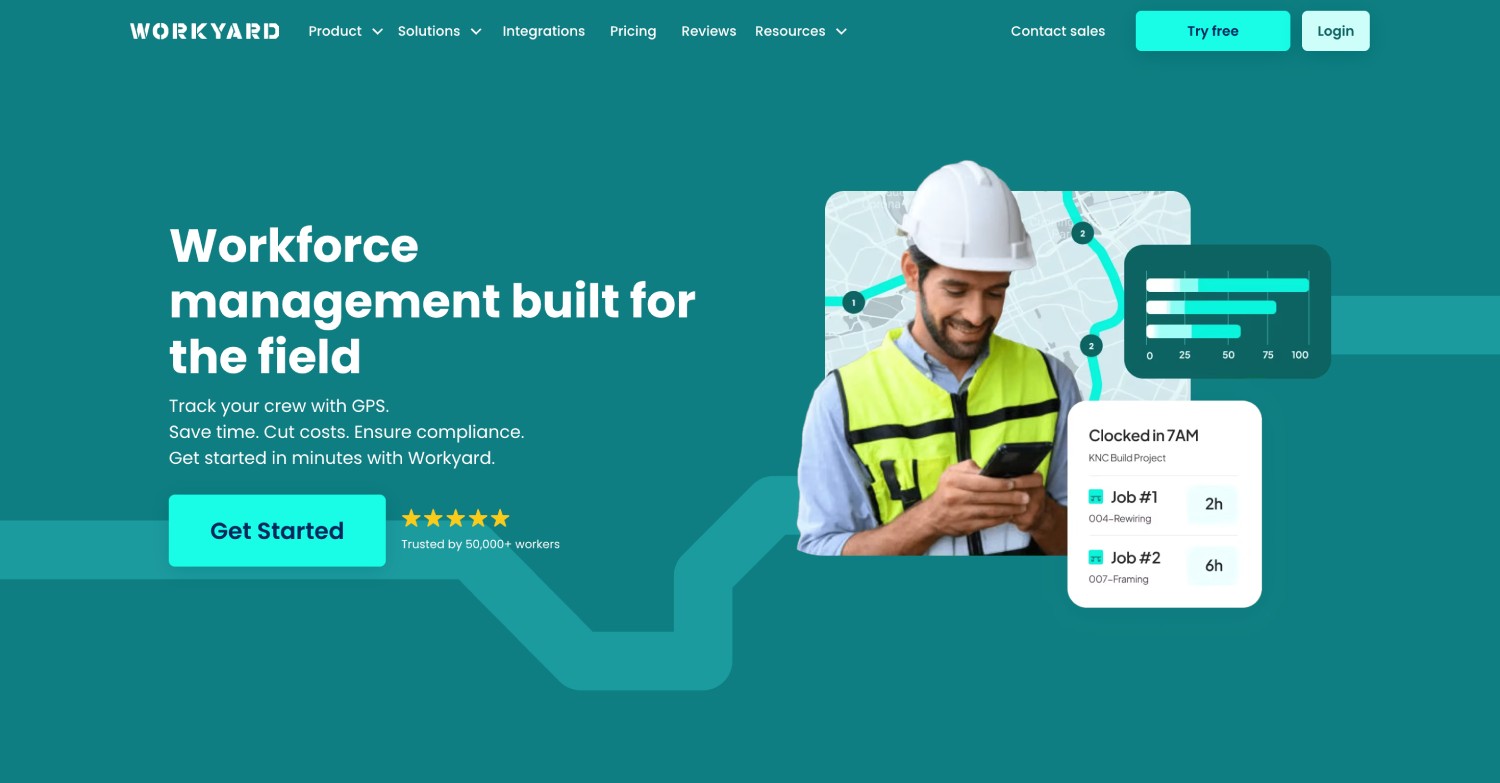
Widely used general-purpose time tracking with AI facial recognition, GPS tracking, geofencing, and offline mode, available on personal phones or a shared kiosk. Generalist rather than construction-specific.
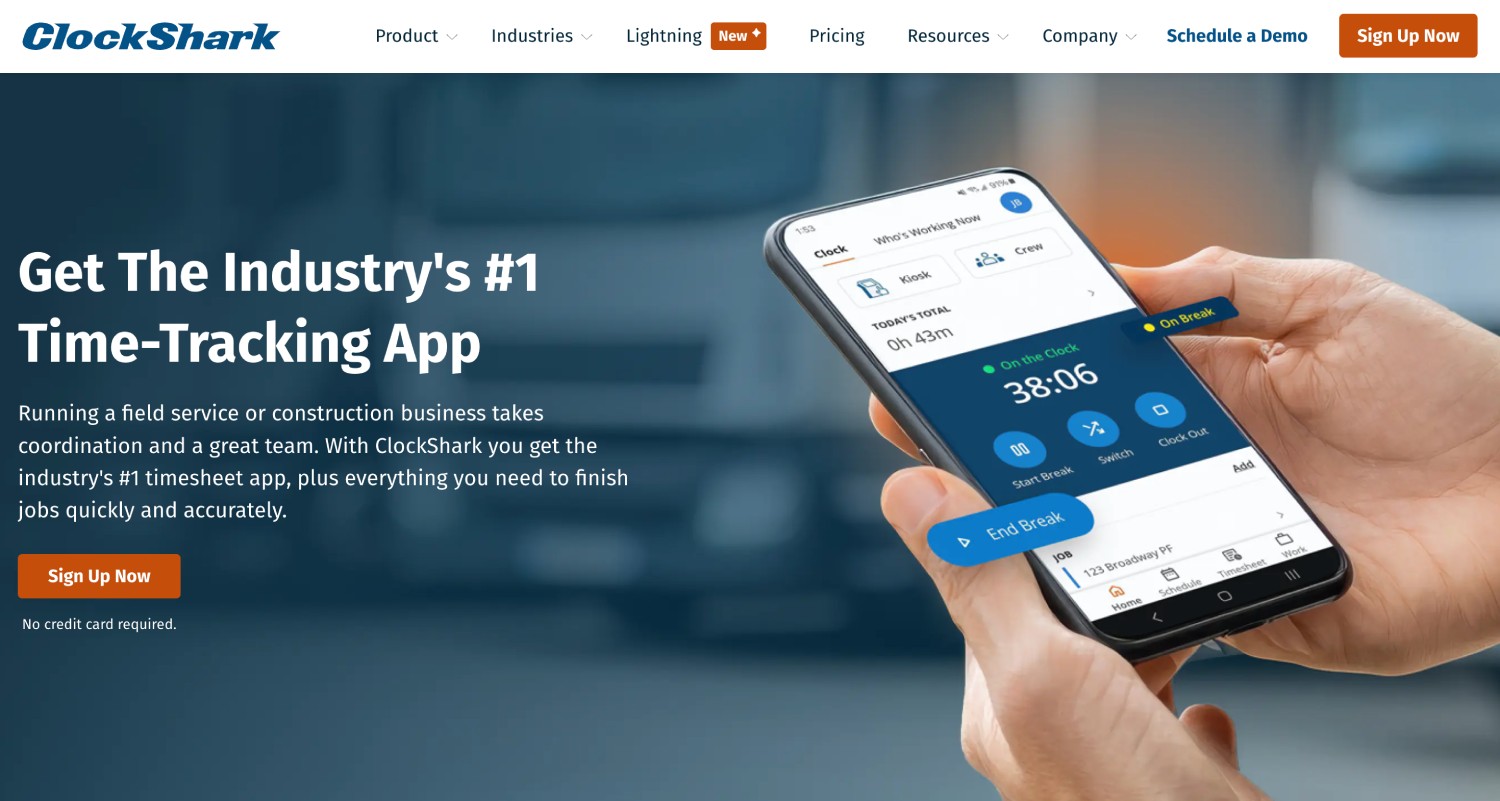
Purpose-built for construction and field service, with GPSFence, job and task tracking, and scheduling. Its face check is associated with kiosk mode rather than being uniform across the mobile experience, which matters if crews clock in from their own phones.
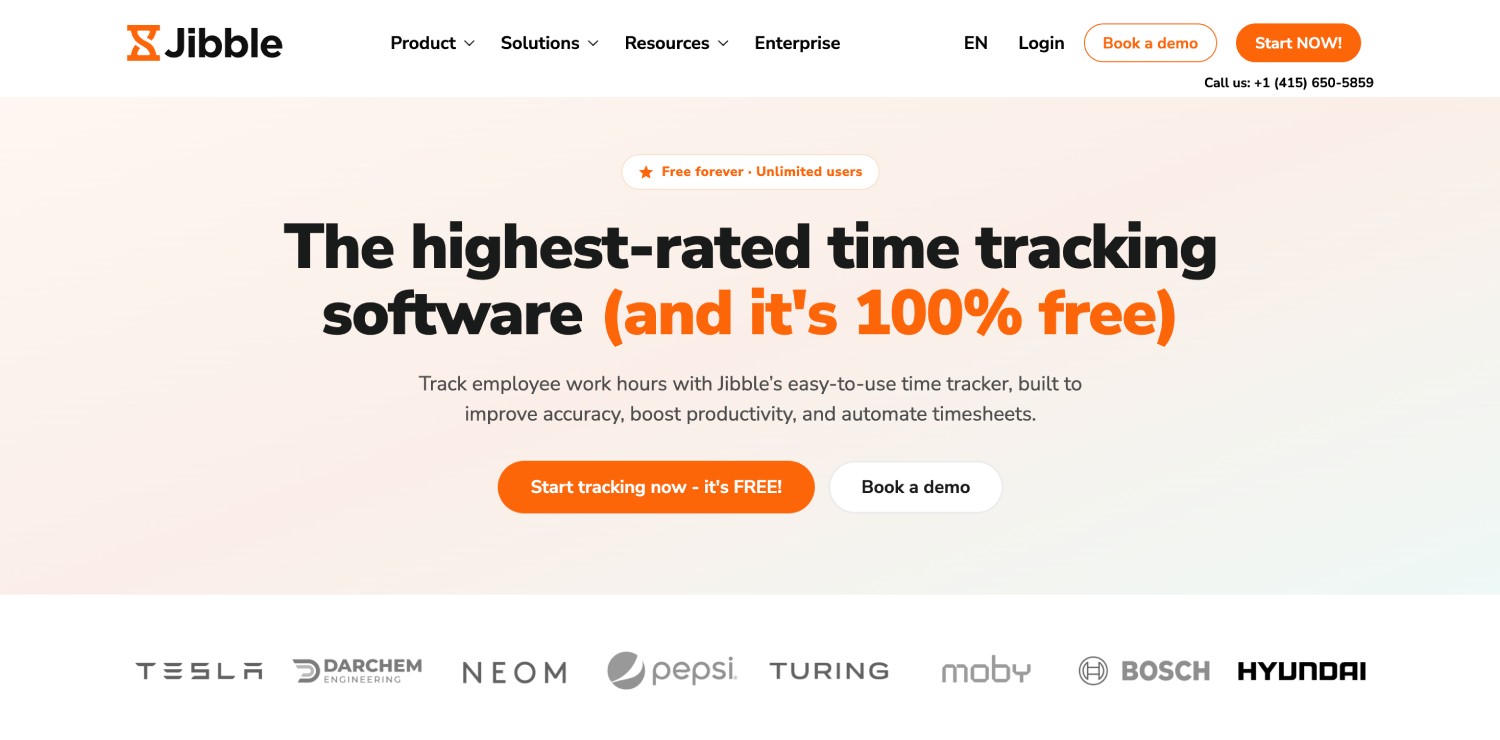
Straightforward time tracking with facial recognition, GPS, geofencing, job codes, and payroll integrations. Its facial recognition clock leans on device Face ID, which suits a small crew clocking in at one shared iPad more than a large distributed operation.
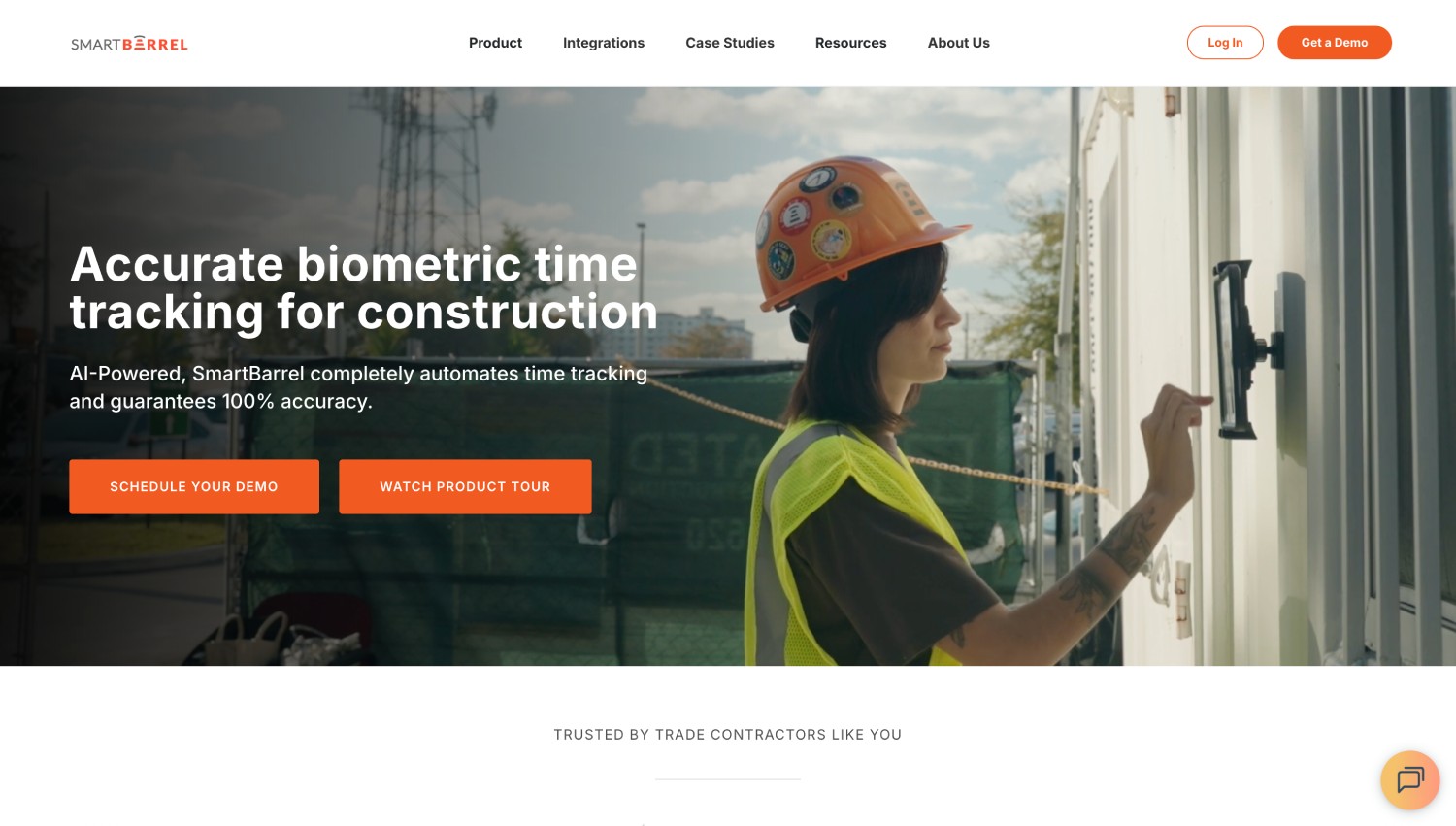
A rugged, weatherproof jobsite device with built-in LTE that can run on battery or solar. Removes the dependency on site Wi-Fi and permanent power entirely, at the cost of a hardware unit per site.
Construction time tracking that pairs labor hours with equipment tracking and daily field reports. Face checking is photo-based. A good fit when equipment utilization matters as much as crew hours.
_%20Best%20for%20rugged%20field%20logging.jpg)
Long-established construction timekeeping with rugged field devices, job costing, and labor allocation. Its FaceFront feature captures a photo at clock-in for a supervisor to review, rather than automatically matching and blocking an unverified clock-in.
Turns an iPad into a fast, touchless face recognition terminal, with offline operation and quick throughput for crews arriving in groups. Built around a fixed kiosk, so it fits a site trailer or gate better than crews moving between sites.


Truein outshines all other time and attendance solutions. Its rich features, payroll ready timesheets and centralized controls put it in a class above all.

Carlos Woodson
Phoenix Transload Services
Truein is a perfect solution for tracking time of our temp workers. It has Excellent support and user-friendly system.

Nicolous Noble
Payroll Administrator, Backerhaus Veit
Truein has strengthened our Time & Attendance accuracy and quality, ensuring compliance and trust among end-users. Excellent product!

Henry Carrillo
Farm Administrator, Unispice
Truein is robust, reliable, and works as promised. I have implemented Truein in my previous and current companies. It's the best and most cost-effective solution.

Piyush Dutt
CPO, Compass Group


Truein is an AI-powered time tracking platform for companies managing hourly, subcontracted, and multi-site workforces. It is not an HRMS, and it is not built for desk-based teams.
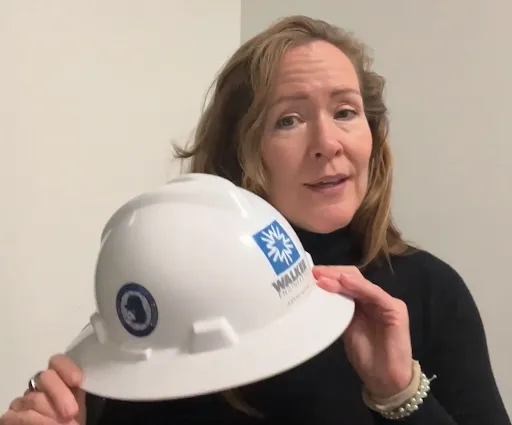
Proof: Walker Engineering runs Truein across 4,000 workers and 100 sites. 500+ companies, 10,000+ locations, 500,000+ workers. 4.8 on G2 and 4.8 on Capterra, checked in September 2026.
Being direct about this saves everyone a demo.
Under 50 workers, one to three sites
Personal phones with geofencing are usually enough, and a lighter general-purpose tool may serve you fine. The break point is subcontractors. Once outside crews are on your sites, verification and separation start to matter more than simplicity.
50 to 500 workers, several active sites
Mixed deployment. Personal phones for crews that carry them, a shared tablet kiosk at sites where they do not. Prioritize offline capture, job codes, and one dashboard across all sites over feature breadth.
500 to 10,000+ workers, GC with subcontractor crews
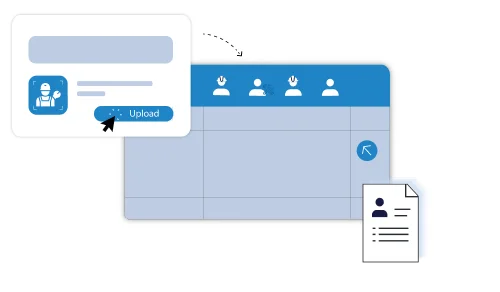
Agency-level controls become the deciding factor: scoped agency access, per-agency headcount caps, document expiry tracking, and per-agency policies and pay rates. Anomaly detection matters at this scale too, because nobody is reading every timesheet by hand.
Almost every tool in this category markets "facial recognition." Three very different things hide behind that phrase.
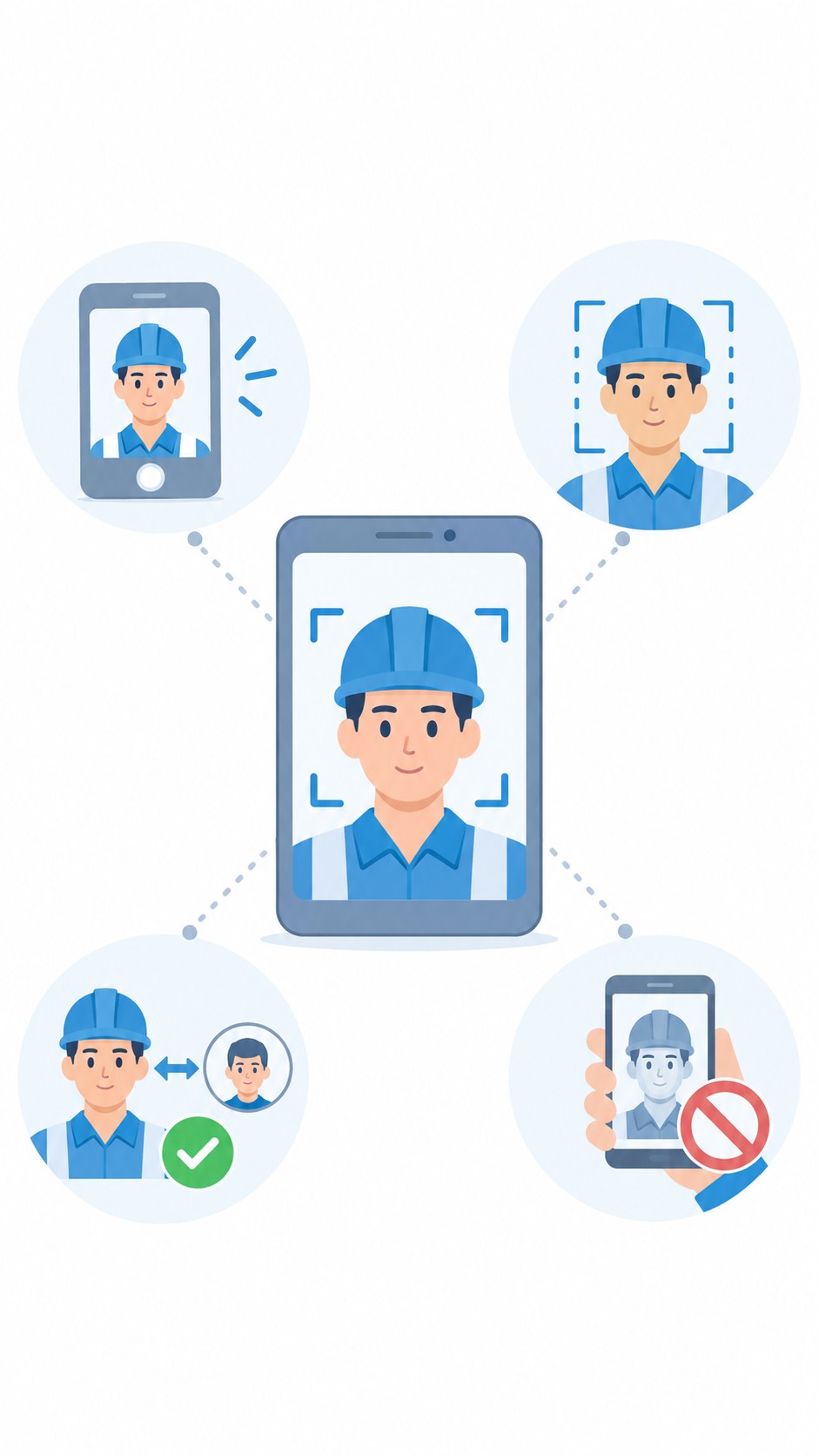
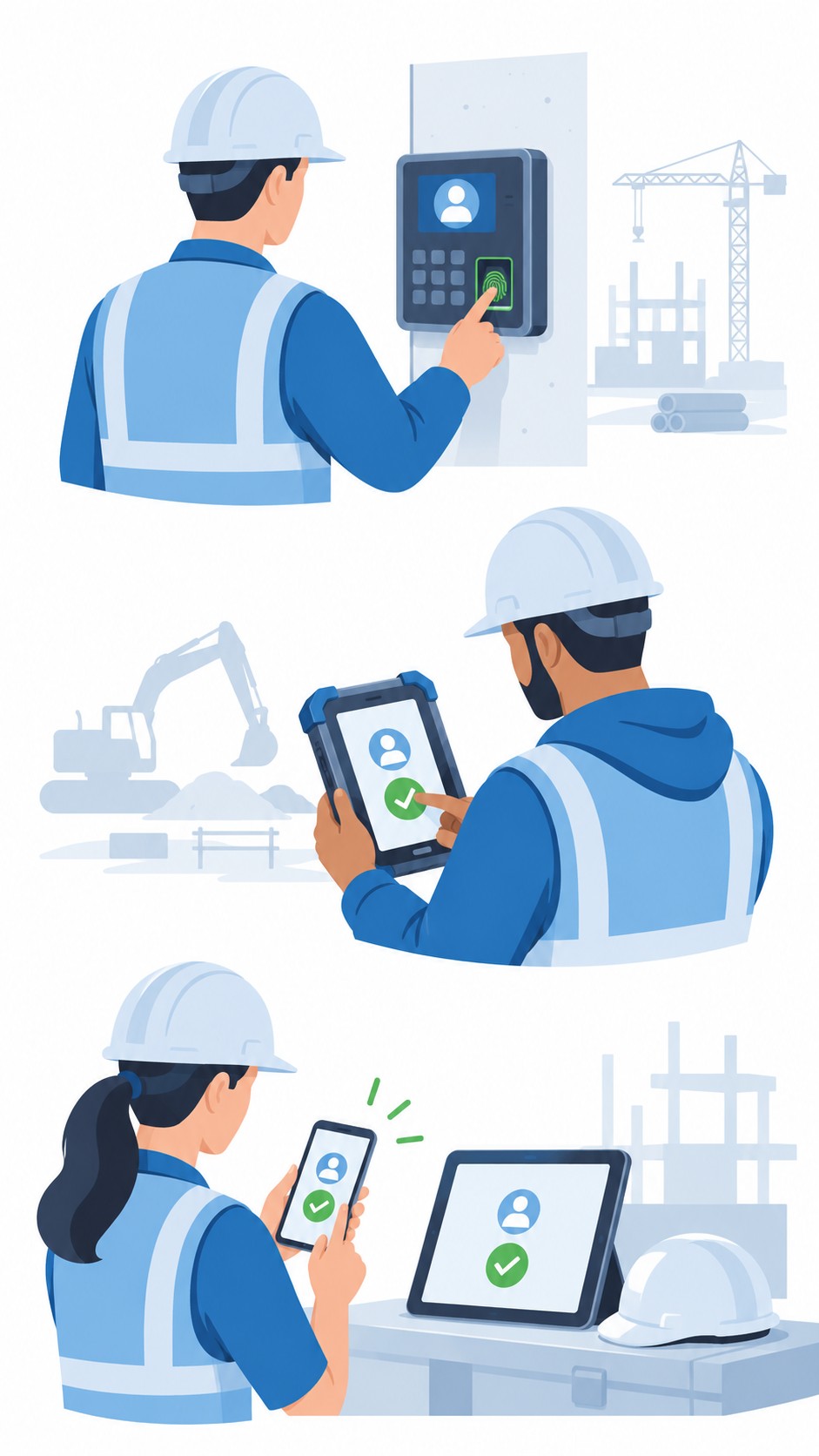
"Face recognition time clock" covers three different purchases. Picking the wrong category is the most common and most expensive mistake in this evaluation.
Wall-mounted biometric terminal
An office-style face or fingerprint terminal bolted at one entrance. It does not travel with crews, needs power and network at every site, and gives you no GPS, job codes, or payroll data. Fine for a permanent yard. Wrong for job sites that open and close.
Rugged jobsite hardware
Purpose-built weatherproof units with their own connectivity and power, such as SmartBarrel. Excellent for remote sites with no power or Wi-Fi. You buy and install a unit per location, so cost and rollout time scale with site count.
Software on phones or a shared tablet
An app that turns devices you already own into a time clock. New sites go live in minutes with no dedicated hardware to procure. Crews without personal phones clock in at a shared tablet kiosk on site.
For most contractors running multiple active job sites, software plus a shared tablet where needed is the practical default. It gives you identity verification, GPS, job codes, and payroll data without a hardware purchase per site.
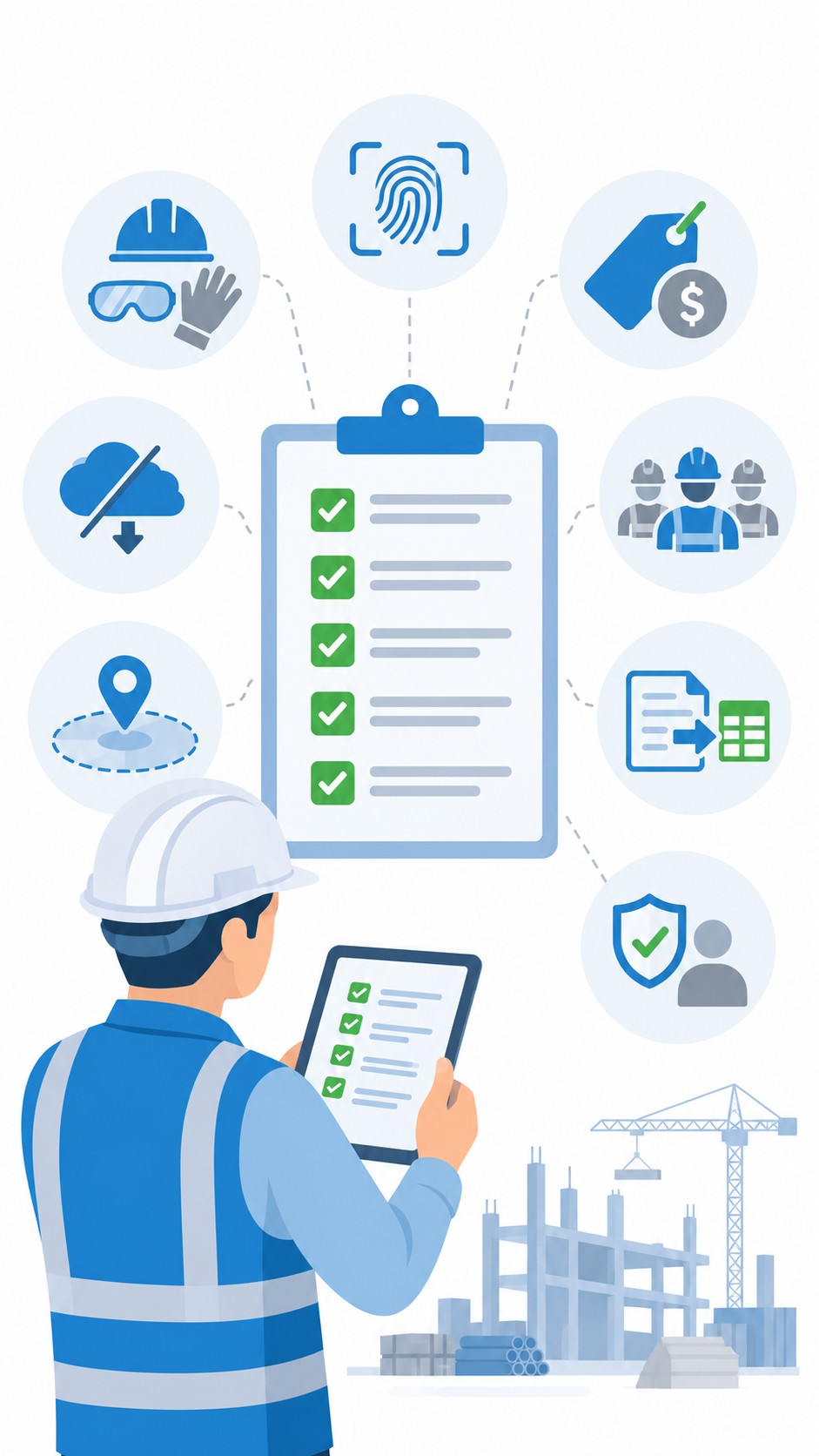
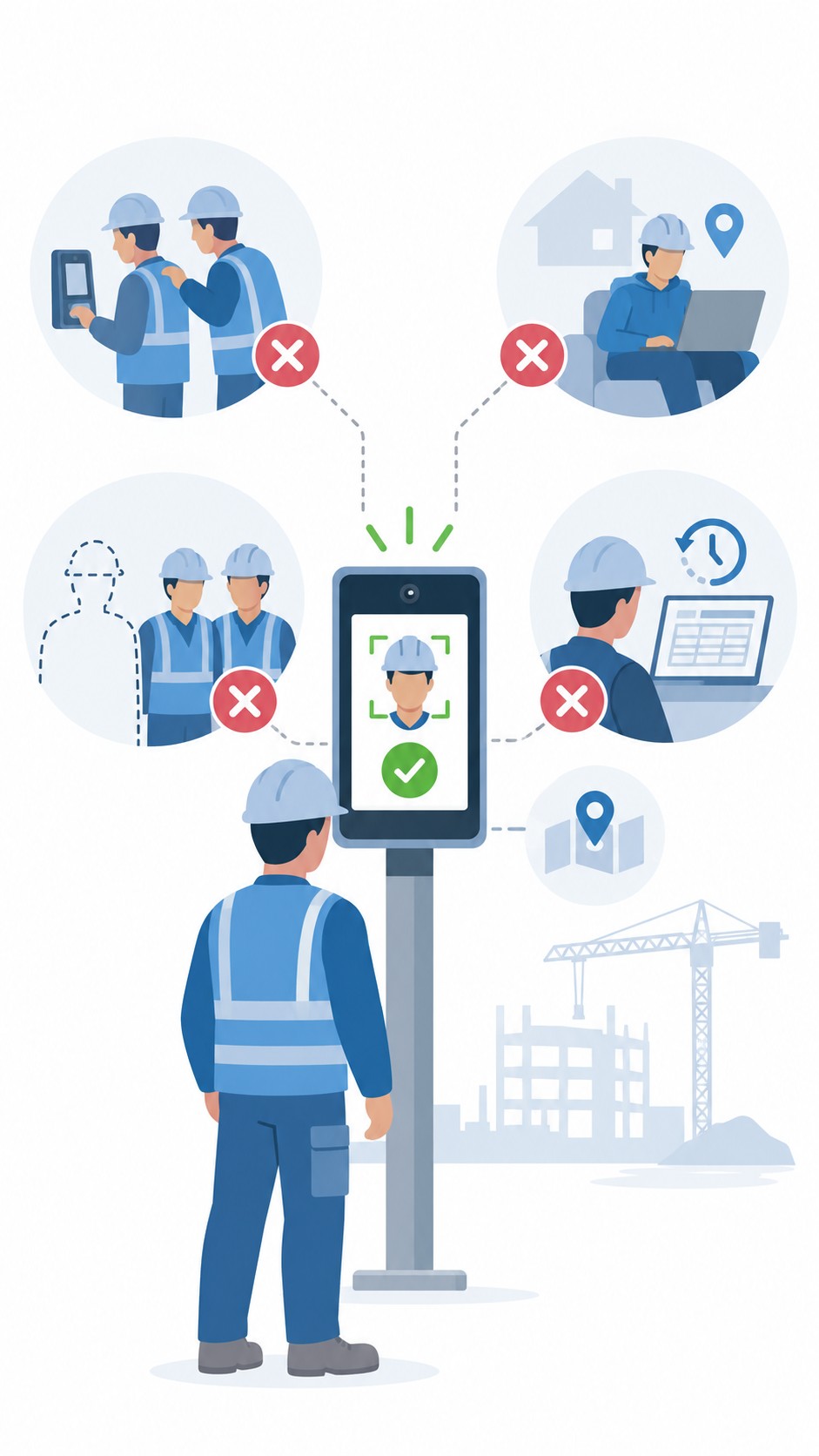
Time fraud on construction sites is rarely one dramatic incident. It is four ordinary patterns that compound quietly.
The pattern that matters: every one of these is cheaper to prevent at clock-in than to reconcile at payroll.
Yes, when it is deployed with consent. Five states have biometric consent requirements that apply to workplace attendance, and the practical risk profile differs across them.
California is the most active consideration for most employers right now. The employee exemption under the CCPA and its CPRA amendment expired on 1 January 2023, so California employees now have full notice, access, and deletion rights over biometric data collected at work, including for time and attendance. If you have California sites, treat this as current, not future.
Illinois carries the highest practical litigation exposure. The Biometric Information Privacy Act requires written consent before biometric data is collected and lets individuals sue directly. That private right of action is what sets it apart from every other statute on this list.
Texas (CUBI), Washington (RCW 19.375), and Colorado (HB 24-1130, effective 1 July 2025) all require notice and consent before biometric identifiers are captured or enrolled for a commercial or employment purpose. None has a private right of action; each is enforced by the state attorney general. Colorado additionally requires a written retention and deletion policy and deletion within 24 months of an employee's last interaction, unless a statutory exception applies.
Truein uses consent-first enrollment. When enabled, workers review and accept a recorded consent screen before any face data is captured, which is the recommended configuration for states with biometric consent laws.