


.jpg)

These 9 biometric attendance systems are physical biometric machines: face, fingerprint, or hybrid devices you install at a fixed entry point. They are ranked below by accuracy, price, and best-fit environment. If you run one office with a stable headcount, one of these will likely work well. If you manage contract workers, daily wage staff, or sites spread across cities, read to the end.
A biometric attendance machine cannot solve problems that come from having more than one location, and there is a dedicated-hardware-free alternative, like Truein’s AI-powered time and attendance software built exactly for that.
A site supervisor in a Pune manufacturing unit still keeps a paper backup register next to the biometric machine at the gate, because the fingerprint sensor has failed twice this month on workers with calloused hands.
That is the most common reason attendance machines get replaced in India: not because the technology is bad, but because it was built for a different kind of workplace than the one actually using it.
Every "best biometric attendance system" list treats the category the same way, a numbered set of machines with a price tag and a spec sheet each. That works if you are buying hardware for one office.
It stops working once your workforce spans multiple sites, includes contract or daily wage staff who rotate between locations, or works in conditions where a fingerprint scanner regularly misreads.
This article ranks the 9 strongest biometric attendance machines available in India for 2026, then covers what to do if a machine is not the right fit at all, because for a growing number of Indian businesses, it genuinely is not.
Key Takeaways
- Face recognition devices dominate new biometric buying in India in 2026, mainly for hygiene and speed.
- Fingerprint machines are the cheapest option but fail more often on worn, dusty, or wet hands, common in manual labour environments.
- Every device on this list is a fixed hardware cost per site. Adding a location means buying another unit.
- Multi-site operations and contract workforces run into hardware limits faster than single-office setups do.
- A software-only alternative exists for businesses that would rather not install machines at all: Truein runs face recognition attendance on phones or tablets across multiple sites, built for contract and daily wage workforces
A Biometric Attendance System Means ‘Hardware’. Here's What That Includes
.jpg)
A biometric attendance system, as the term is used across India's HR and facilities market, is a physical device installed at a fixed entry point that verifies identity using a unique physical trait before logging a worker's time in or out.
That includes face recognition terminals, fingerprint scanners, iris scanners, and hybrid units combining two or more of these with an RFID card reader.
Biometric attendance has become the umbrella search term for this hardware category, and most vendors use it interchangeably with "punching machine" or "biometric machine."
A biometric attendance system, in the way the term is generally used in India, usually means a piece of hardware. But the category has quietly split into two forms: dedicated hardware devices installed at a fixed point, and software-based biometric attendance, where the same face recognition runs on a phone or tablet instead of a purpose-built machine.
Both verify identity with a biometric trait. Only one needs a device shipped and wired to every site. That distinction shapes everything else here going forward.
The 9 Best Biometric Attendance Machines in India (2026), Ranked
These rankings are based on published device specifications, price bands reported across Indian B2B marketplaces, and how each device performs in the environment it is built for: accuracy under real conditions, price-to-feature value, service network in India, and honest limitations most buying guides skip.
Disclaimer: Pricing information has been sourced from IndiaMART, an Indian B2B online marketplace, and is subject to change. Readers are advised to verify details independently at the time of purchase.
Each device above trades off accuracy, price, and durability differently: face recognition units generally cost more but recover faster in high-throughput or hygiene-sensitive settings, fingerprint units cost less but degrade fastest on manual-labour hands, and hybrid or rugged models close that gap at a higher upfront price.
The table ranks by device category, but the right pick depends more on your work environment than on the spec sheet alone.
Here is the quick rule most guides skip: Choose face recognition for offices, schools, and clinics where hygiene and speed matter; choose fingerprint only if your team works in a clean, stable environment; choose a rugged or hybrid model for factories, outdoor sites, or any workforce with manual labour hands.
Fingerprint units in particular see rising rejection rates on workers with calloused, dusty, or wet hands, a well-documented limitation across manufacturing and construction deployments in India.
The most expensive device on this list is not automatically the best fit. A ₹30,000 enterprise unit sitting at a single 20-person office site is a poor use of budget compared to a ₹7,000 device that does the job just as well for that headcount.
Where Every Biometric Machine on This List Runs Into Trouble
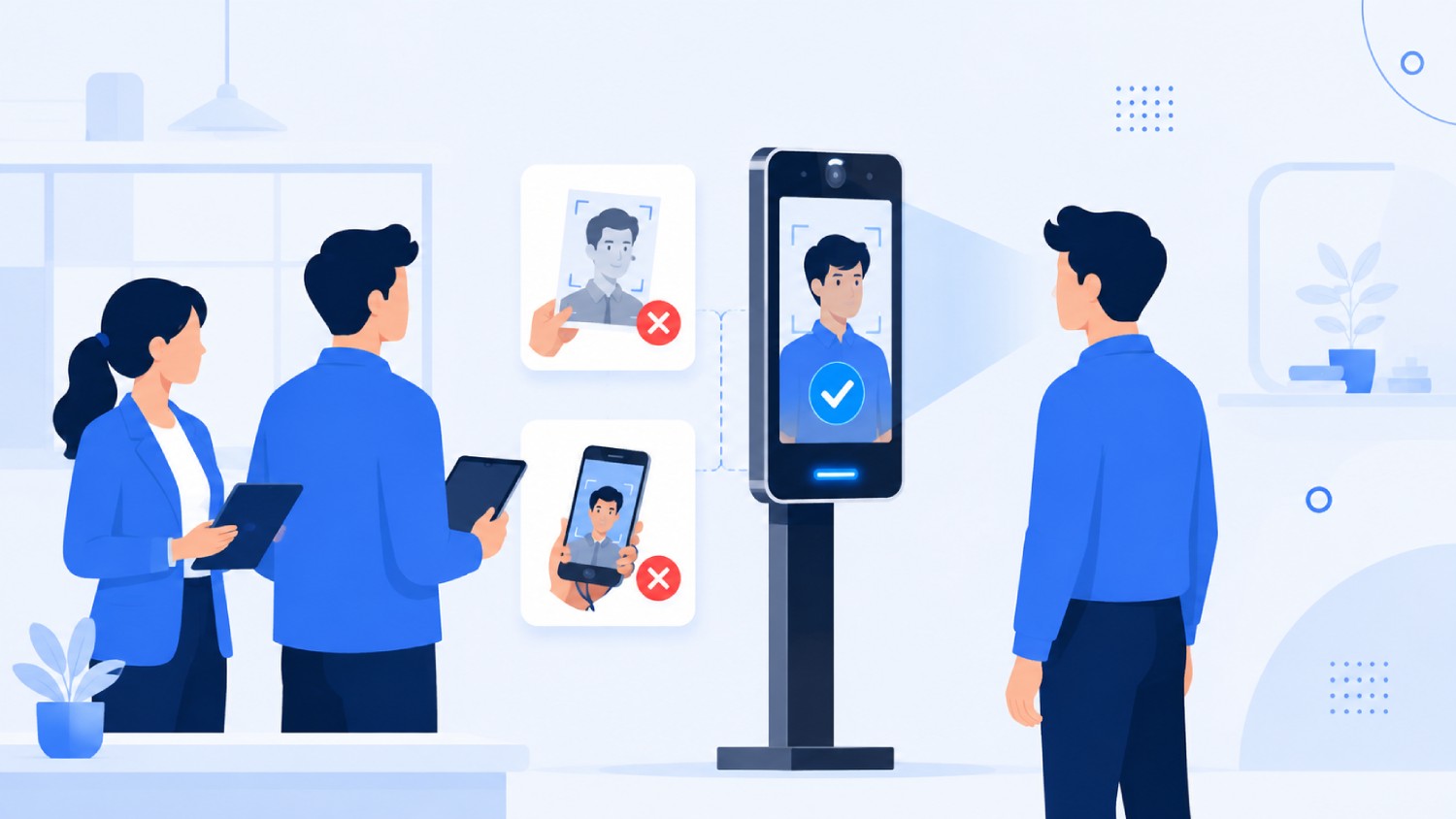
Every one of the 9 systems above shares the same structural limitation: each is a piece of dedicated hardware tied to one physical location. That creates four problems regardless of which brand you pick.
1. Cost That Scales With Sites
The first is the cost that scales with sites, not staff. A business running one office pays once. A business running ten sites pays ten times over, plus installation, wiring, and a service contract at each location.
2. Fingerprint Failure in Real Working Conditions
Workers doing manual labour, cleaning, or outdoor construction have hands that are dusty, wet, calloused, or bandaged more often than office workers do, and fingerprint sensors read those hands less reliably. This is among the most common complaints HR teams raise about hardware-based attendance in India.
If your workforce includes manual labour or field staff, do not choose a fingerprint-only device without testing it against actual worker hands first. A demo with clean-handed office staff will not reveal this failure mode.
3. Downtime With No Fallback
When a wall-mounted unit breaks, fails to sync, or loses power, attendance capture stops entirely at that site until someone repairs or replaces it. Several of the systems above lack battery backup as standard, so a power cut becomes a lost attendance day.
4. Lack of Flexibility in Deployment
Adding a new site means procuring, shipping, installing, and wiring another device before that location can capture attendance at all. None of that happens in minutes. It happens over days or weeks, a real cost for any business opening or closing sites often.
What Happens When Your Workforce Doesn't Sit in One Building
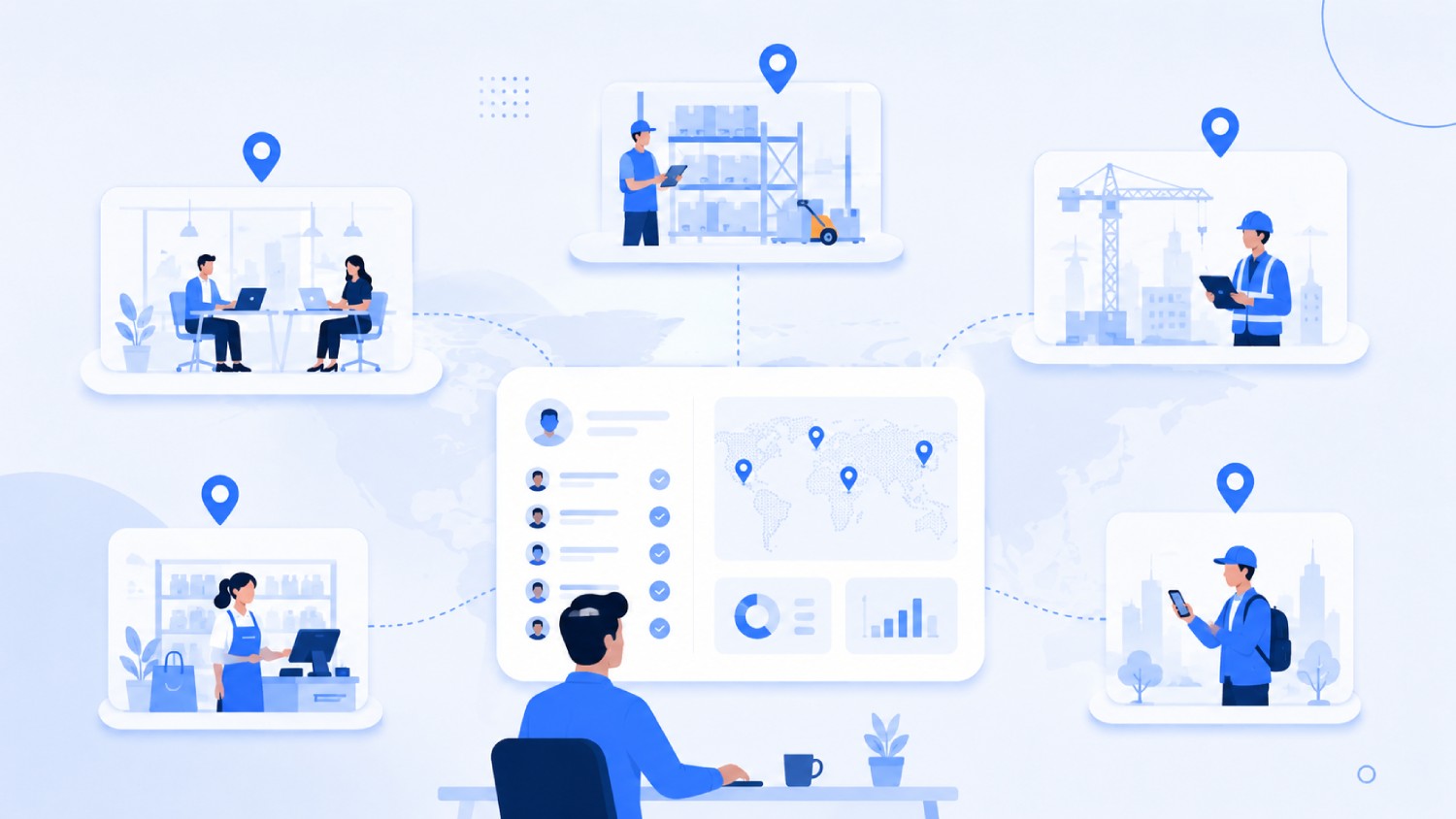
The four problems above matter most to businesses with contract workers, daily wage staff, or operations spread across multiple sites: a large share of India's construction, facility management, manufacturing, and manpower-staffing sectors.
A contract or daily wage worker who moves between client sites cannot bring "their" biometric machine along. Their fingerprint or face template has to be re-registered at every new location, exactly the kind of manual re-enrollment that eats into HR workload every time a manpower agency rotates staff.
Muster roll reconciliation, the standard record of contract labour attendance across Indian sites, becomes a monthly headache when ten different fixed devices each produce separate, unsynced attendance logs.
A business opening a new site faces the procurement delay described above, multiplied by however many locations it plans to add that year. For a retail chain or FMCG distributor scaling into new cities, that delay is a real operational cost, not a minor inconvenience.
Most "best biometric system" roundups stop here, because they are written for a single fixed office and do not address what happens when the workforce itself is the variable, not the building.
To get a better understanding of why face recognition is better than conventional biometric attendance, it is worth reading our deep dive on face attendance vs. biometric systems.
The Alternative to Buying a Machine: AI-Powered Time and Attendance Software
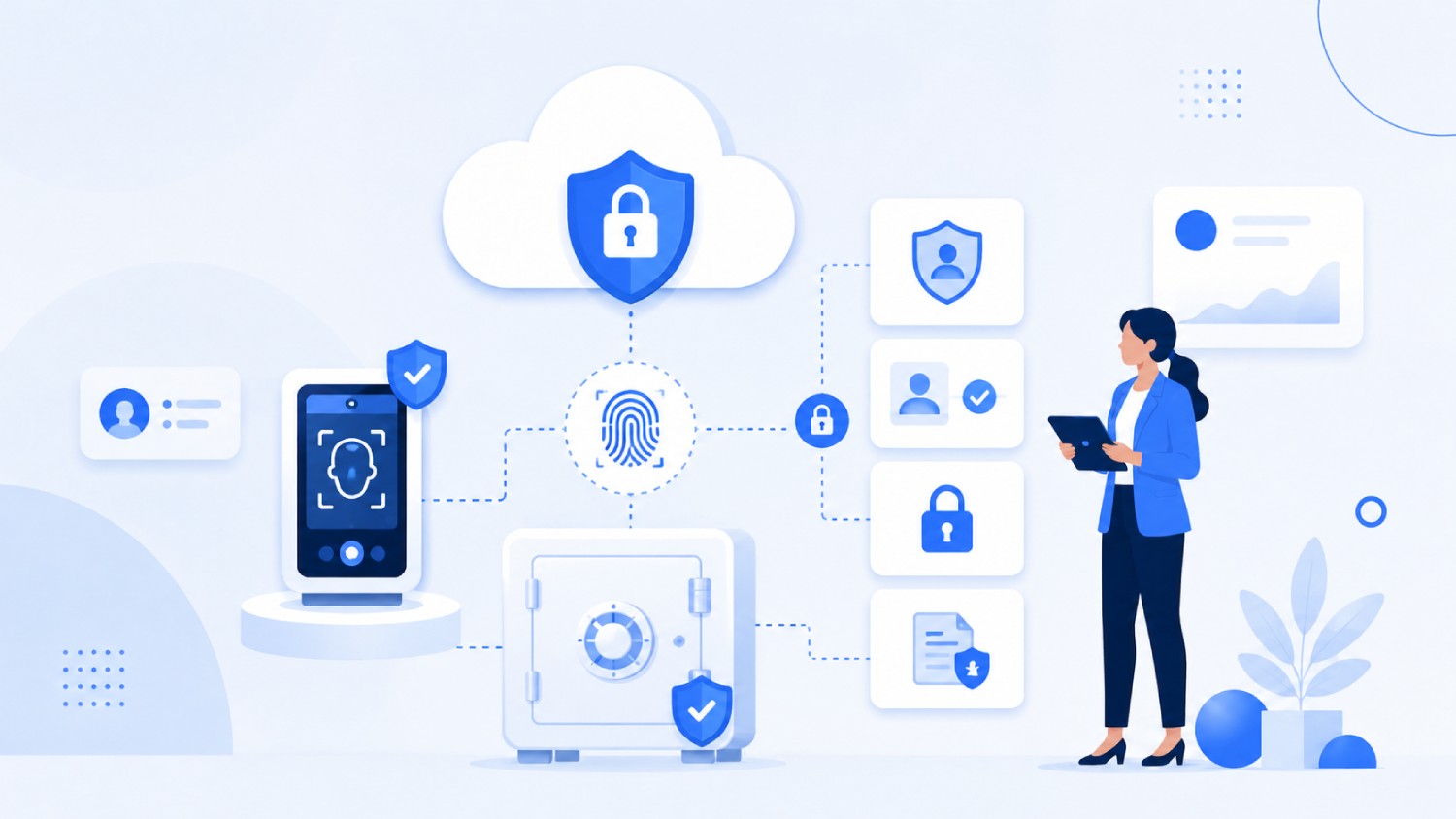
For businesses managing contract, daily wage, or multi-site staff, the fix is not a better machine. It is removing the need to buy, ship, and wire a dedicated one at every site.
Truein is an AI-powered time and attendance software built for contract workers and multi-site workforces. It verifies identity at clock-in using AI face recognition, with GPS geofencing to tie the punch to the site, on any Android or iOS phone workers already carry, or on a shared tablet mounted as a kiosk.
There is no dedicated biometric hardware to buy, ship, or wire, so a new site can start capturing attendance as soon as someone sets up a device it already owns.
This is a different category from the 9 machines above. A biometric attendance machine is single-purpose hardware built and sold only to capture attendance, installed once at one place.
Truein is dedicated-hardware-free software instead: it runs on general-purpose devices a business already has, whether that is a phone each worker carries or a shared tablet fixed at a gate, which matters for a workforce that does not stay in one place.
The face recognition match happens at the moment of the punch, blocking an unregistered face from clocking in on-site. Truein’s AI TimeGuard module continuously scans for suspicious patterns, like repeated attempts from unusual locations or timing anomalies, and flags them for a manager to review.
The Number: Truein currently runs across 500+ clients, 25 countries, and 10,000+ locations, with more than 500,000 users on the platform as of 2026.
Face Attendance Across Multiple Sites, Without a Device at Any of Them
Take a facility management company running attendance across 50 client sites, some in tier-2 cities with unreliable mobile networks. Truein’s offline clock-in feature captures the clock-in on the device even when there is no signal, and syncs those records automatically once connectivity returns, so a low-signal site never means a missing attendance day.
For businesses routing staff through manpower agencies, Truein’s face-based contract labour attendance feature maps each contractor to a specific agency and site, with headcount caps and document expiry tracking built-in, so a client can verify which agency's workers were present without cross-checking a muster roll by hand.
Managers see one dashboard across every connected site instead of chasing individual site reports.
On the fraud side, AI TimeGuard flags unusual patterns, like overtime spikes or repeated late corrections, so a manager reviews only the exceptions rather than auditing every timesheet by hand. It does not guarantee every fraudulent entry gets caught. It narrows the review to what actually looks wrong.
Truein produces payroll-ready reports and connects with payroll and HRMS tools businesses already run. It does not process payroll itself and is not positioned as a full HRMS, complementing the tools a business already has rather than replacing them.
Clients Who are Using Truein’s AI-powered Time and Attendance Software
Companies managing large, distributed contract workforces in India, including Compass Group, OCS Group, and SJ Contracts, run attendance this way across their site networks.
To know more about how Truein’s clients have benefited from its AI-powered time and attendance platform, it is worth going through Truein’s Case Studies.
Truein holds a 4.8 out of 5 rating on G2 and Capterra, based on reviews last checked in July 2026.
A biometric attendance machine does not travel with your workforce. Biometric attendance software does.
Machine or Software: How to Decide For Your Business
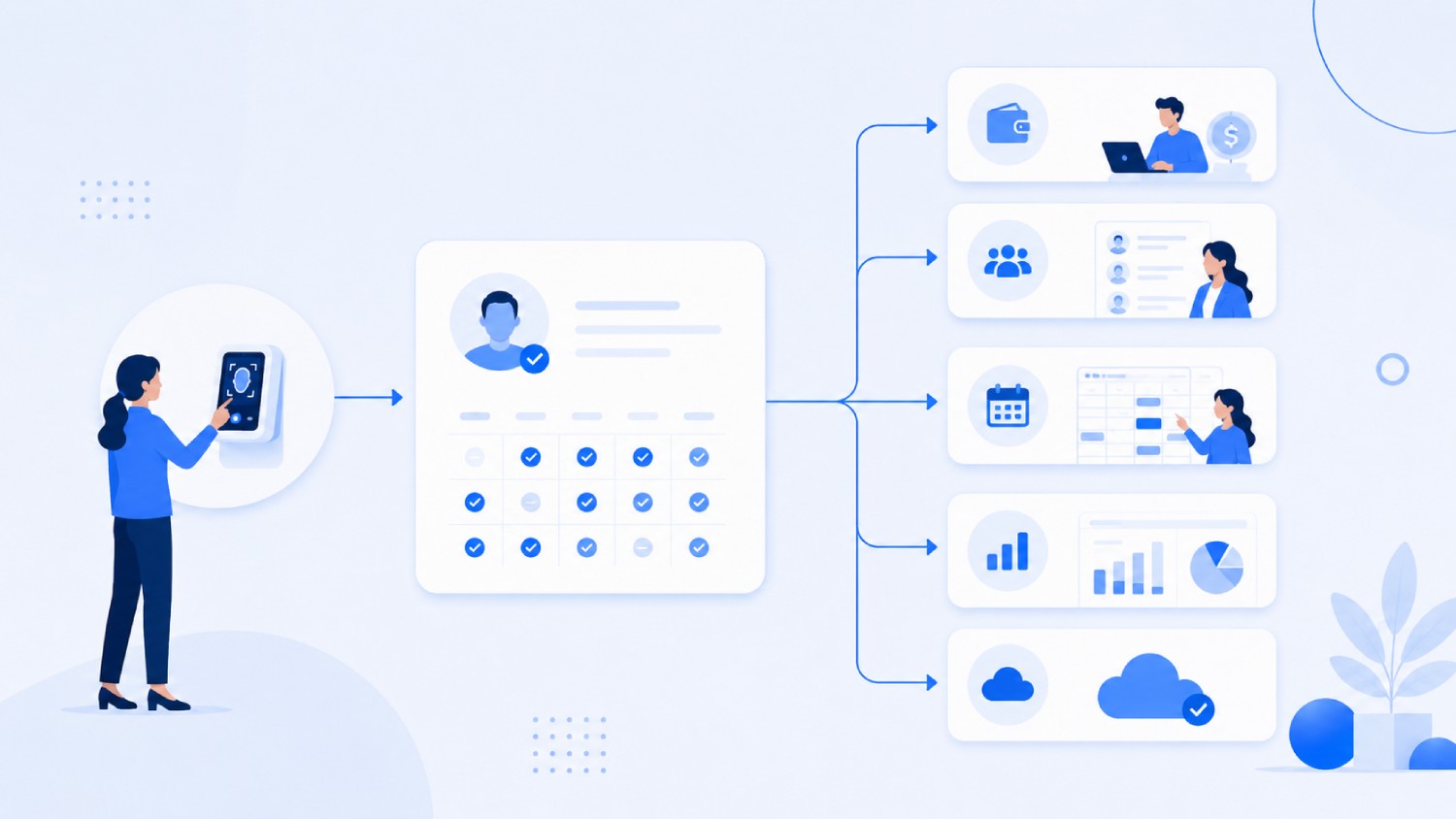
The decision comes down to how fixed your workforce and sites actually are.
If you run one office with stable, permanent staff in a clean environment, a device from the list above will likely serve you well and costs less upfront than a software subscription for a small headcount.
If you operate in more than one site and are dealing with staff turnover, contract labour, or connectivity gaps, treat hardware as the wrong starting point, not a stopgap to fix later. Retrofitting software onto a business that has already sunk cost into machines at every site is harder than starting with software from day one.
If your business plans to open new sites this year, ask whether each new location can afford the procurement delay a physical device requires, because that delay repeats every time you expand.
Three Rules for Choosing Between a Machine and Software
Cut through the spec sheets with three decision rules.
- Rule 1: If every worker clocks in at the same fixed address every day, buy hardware.
A single-site business with a stable headcount gets a lower total cost from a device than from a software subscription.
- Rule 2: If your workforce touches more than one address in a month, contract labour, daily wage staff, or multi-site operations, skip hardware entirely.
Re-enrolling fingerprints or faces at every new site erases the cost advantage hardware had in Rule 1.
- Rule 3: If your sites have unreliable connectivity, prioritize offline capture over brand or accuracy specs.
A device or app that loses attendance data during an outage costs more in disputed payroll than a slightly lower accuracy rating ever will.
Is Biometric Attendance Legal and Compliant in India?
Yes, with conditions. Biometric and attendance data collected from employees in India falls under the Digital Personal Data Protection Act (DPDP Act, 2023), being rolled out in phases covering consent, data minimization, and breach notification. This is separate from labour law and governs how biometric data specifically is collected and stored, not how contract labour is classified or paid.
For contract and daily wage workers, compliance now sits under India's four Labour Codes, effective November 21, 2025, with final central rules notified May 8, 2026 and state-level rules still rolling out.
The older Contract Labour (Regulation and Abolition) Act, 1970 is now consolidated primarily into the Occupational Safety, Health and Working Conditions Code, though "Contract Labour Act" is still a common shorthand in casual conversation.
Separately, PF and ESIC coverage is being extended to contract, fixed-term, and gig workers under the Code on Social Security, not limited to permanent staff the way it once was.
No attendance vendor, Truein included, guarantees legal compliance on a business's behalf. What a platform can reasonably offer is configurable policies designed to support compliance with local labour rules and consent-first data handling: a tool a business applies, not a guarantee it receives.
Disclaimer: This section does not constitute legal advice. The information presented is based on available references at the time of writing and may contain inaccuracies or omissions. Readers are advised to verify details independently or consult a qualified professional.
Frequently Asked Questions
1. Which biometric attendance machine is best for a small office in India?
For a small office with under 30 staff in a clean, stable environment, a budget fingerprint device like the Mantra MFS100 covers the basics without a large upfront cost. This unit will approximately cost you between ₹2000 to ₹3000 as of July 2026 and handle single-location attendance reliably.
The tradeoff is that the MFS100 has no native attendance software of its own. It ships with a device driver and RD Service for fingerprint capture, so a business needs a separate application, in-house or third-party, to actually turn those fingerprint scans into attendance records and payroll-ready data.
2. Can fingerprint attendance machines fail for factory or manual labour workers?
Yes. Fingerprint sensors read worn, dusty, wet, or calloused hands less reliably than clean office hands, and manual labour, construction, and cleaning workers experience this far more often.
This is one of the most commonly reported complaints about fingerprint hardware in Indian manufacturing and construction settings. Face recognition devices or software-based attendance systems like Truein generally hold up better in these environments, since they do not depend on skin condition.
3. Do I need to buy a biometric machine for every new site?
If you use hardware-based biometric attendance, yes, each physical location needs its own device, installation, and wiring before it can capture attendance.
This is one of the main reasons multi-site businesses in India move toward software-based attendance instead, since apps like Truein run on a phone employees already carry, or on a shared tablet a site simply mounts at the entrance, without buying or installing new dedicated biometric hardware for each location.
4. How much does a biometric attendance machine cost in India?
Basic fingerprint devices start around ₹2,000 to ₹5,000, multi-modal devices combining face, fingerprint, and RFID run ₹8,000 to ₹15,000, and enterprise-grade face recognition or access-control units start at ₹30,000 and up.
Software-based alternatives like Truein remove the dedicated hardware cost entirely. Attendance runs on a phone workers already carry or a shared tablet set up as a kiosk, so the only possible cost is a basic tablet if a site does not already have one for a kiosk setup.
5. Is biometric attendance data safe and legal to collect in India?
Biometric attendance data in India is governed by the DPDP Act, 2023, which is being implemented in phases and covers consent, data minimization, and breach notification for how this data is collected and stored. It is legal to collect with proper consent and safeguards in place.
No vendor can promise blanket legal compliance, since that depends on how a specific business implements consent and data handling, but reputable platforms are built around consent-first collection as a starting principle.
6. What's the difference between a biometric attendance machine and biometric attendance software?
A biometric attendance machine is a single-purpose physical device installed at one fixed location, requiring purchase, wiring, and ongoing maintenance at every site.
Biometric attendance software, such as Truein, verifies identity using face recognition on a general-purpose phone or tablet, whether that is a device each worker carries or a shared tablet a site mounts at the gate as a kiosk, with no dedicated biometric hardware to install.
Machines suit single-office setups with stable staff, while software suits multi-site or contract workforces that need attendance capture to move with the business rather than stay fixed in one place.
7. Can biometric attendance work if a site has no internet connection?
Some software-based systems, including Truein, capture the clock-in on the device itself when there is no network and sync those records automatically once connectivity returns. This means attendance is not lost during an outage, though the manager dashboard shows offline punches only after the sync completes, not instantly.
Most hardware biometric machines store punches in local device memory, so the punch itself is not lost during an outage. What breaks is visibility: those logs sit on the device until someone syncs or exports them, and across ten sites that means ten separate logs to consolidate. Software with offline sync closes that gap automatically.
Most hardware biometric machines store punches in local device memory, so the punch itself is not lost during an outage. What breaks is visibility: those logs sit on the device until someone syncs or exports them, and across ten sites that means ten separate logs to consolidate. Software with offline sync closes that gap automatically.
8. Which biometric attendance system is best for contract workers in India?
For contract and daily wage workforces that rotate between sites, a software-based biometric attendance system like Truein fits better than a fixed machine. Truein verifies each worker's identity with AI face recognition on a phone or shared tablet, maps every contractor to their agency and site with headcount caps and document expiry tracking, and works offline at low-connectivity sites.
A fixed machine, by contrast, requires re-registering every rotating worker's fingerprint or face at each new location. If your workforce is permanent and stays at one address, a hardware device from the list above remains the cheaper option.
9. Which face attendance system works best for multiple sites in India?
For businesses running attendance across multiple sites, a face attendance system that needs no dedicated hardware, such as Truein, avoids the per-site biometric device cost. Sites where staff use their own phones need nothing extra, and a site using kiosk mode may need a basic tablet if one is not already available. Each location clocks in through face recognition on a phone or a tablet kiosk the business already owns, every site feeds one central dashboard, and a new site can start capturing attendance the same day it opens. Hardware face recognition terminals work well for a single fixed location but multiply cost, installation, and maintenance with every site added.
The Bottom Line
The 9 machines ranked above cover most needs for a business running one stable location with a fixed headcount, and choosing between them mostly comes down to environment and budget.
The moment a business runs multiple sites, manages contract or daily wage labour that moves between locations, or works in conditions where fingerprints fail often, hardware stops being a convenience and starts working against the business instead.
That is not a reason to avoid biometric attendance. It is a reason to separate the technology from the box it usually comes in. Software that verifies identity the same way a machine does, without needing a machine at all, solves the exact problems that show up once a workforce stops fitting inside one building.
If your sites keep multiplying and every one of them currently needs its own machine, it is worth scheduling a demo with Truein to see how it handles attendance across all of them from a single dashboard, without shipping a single device to any of them.
