Book A Free Demo
Book A Free Demo
ClockShark and ExakTime Alternative
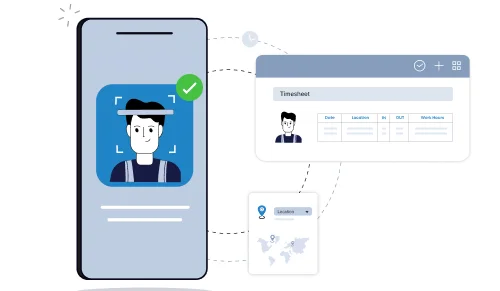
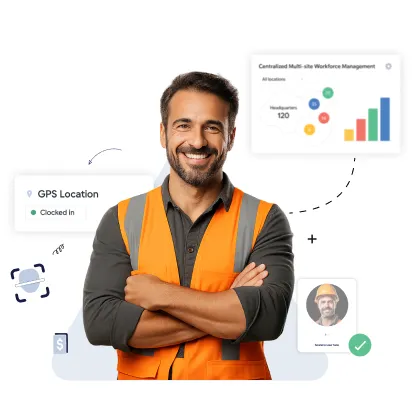
Truein is time-tracking software for hourly crews that can match a worker's live face to their profile on every clock-in, on a phone or a shared kiosk. No match, no clock-in is registered. Compare that to a kiosk photo or a GPS stamp.


Trusted by Workforces Across Industries


Feature Overview
All three record a clock-in. They differ on what the clock-in proves. A GPS stamp proves the phone was on site. A photo proves someone stood in front of the camera. Only a live face match proves the worker on the timesheet is the worker who clocked in.
ClockShark's facial recognition is a Kiosk Clock setting: the shared tablet takes a photo and compares it to the worker's first kiosk photo. On a personal phone, ClockShark records GPS. ExakTime's FaceFront takes a photo at clock-in and clock-out and stores it for the office to review. Arcoro, ExakTime's parent company, states in its own FAQ that FaceFront is not facial recognition software.
Every tool below records time. They differ on what is verified, where, and what happens when the check fails.
Based on ClockShark help documentation and Arcoro's ExakTime product pages as of September 2026. Features change; confirm current behavior in a vendor demo.
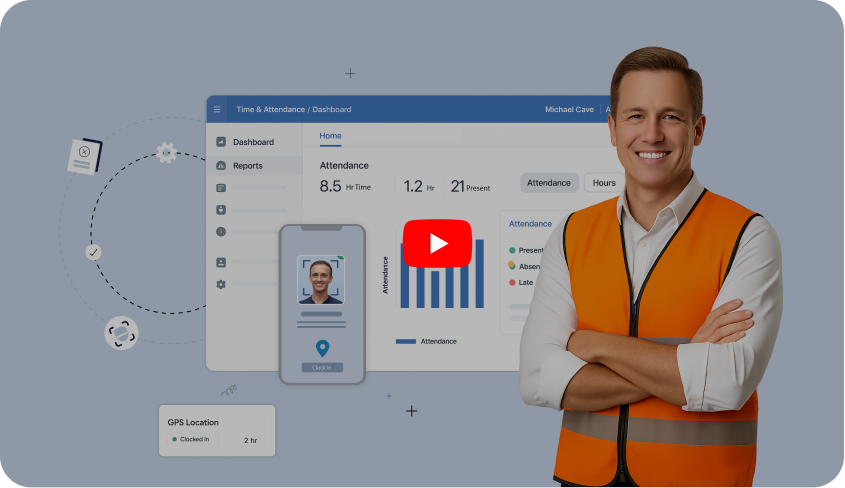
Truein is the option that verifies identity at the moment of clock-in on both personal devices and shared kiosks, blocks mismatches, and reviews clock-in patterns across every site before payroll runs. For a broader feature and scale comparison, see the ClockShark alternative page.
Upgrade your attendance system with touchless, face-based accuracy, eliminating time fraud, improving compliance, and enhancing visibility.
Book A Demo








Benefits
.svg)
Personal phone, shared kiosk, or supervisor's device: face verification can be required on each one. ClockShark limits face checks to the kiosk.
.svg)
Face answers who. Geofence answers where. Truein checks both together, with a radius from 20 meters, roughly 65 feet.
.svg)
Around 95 to 100 percent accuracy with hard hats, masks, facial hair, and changed hairstyles.
.svg)
A failed match stops the punch on the spot. ExakTime's FaceFront saves the photo for someone to review later.
.svg)
AI TimeGuard flags impossible travel, identical clock-in timing, and suspicious corrections so managers review exceptions, not every timesheet.
With photo capture, the sequence is clock-in first, check later. ExakTime's FaceFront stores the image with the time record so a supervisor or office staff can confirm the right person logged in. ClockShark's Kiosk Clock compares the kiosk photo to a reference and shows the image beside the clock-in time for review. In both cases, the hours are already on the timesheet when the check happens.
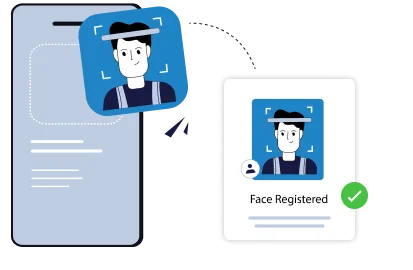
Truein reverses the order. The AI matches the live face to the enrolled profile before the clock-in is recorded. A mismatch blocks the clock-in and prompts a retry. Spoof detection runs on captured clock-ins: in the default configuration a suspicious clock-in is flagged after capture, the record is marked, and the worker can be blocked from further punches. Separately, Smart Capture Rules flag late, off-site, duplicate, and missing clock-ins at the moment of capture for supervisor review.
Quick FAQ’s

.png)
.png)
All three geofence job sites. The difference is what happens when a clock-in lands outside the boundary. ClockShark's GPSFence alerts the admin when an employee clocks in from outside the fence, and the clock-in is recorded for correction afterward. ExakTime sets a custom geofence per job site and maps clock-in locations for supervisors; its product documentation does not describe blocking an out-of-fence clock-in.
Truein makes enforcement a setting. An out-of-boundary clock-in can be blocked outright, allowed with a supervisor alert, or routed for approval, and different crews can run different rules under one account. The geofence radius starts at 20 meters, roughly 65 feet, and each site, floor, wing, or zone can be fenced separately. Location is checked on the same punch as the face, so a valid location cannot compensate for the wrong person.
Quick FAQ’s
Yes. Enforcement is configured per account: block, allow with alert, or send for approval. Enforcement depends on the setup, so choose the rule that fits each crew.
No. Location is captured at the moment of clock-in, inside the geofence. Truein does not track a worker's location in the background between clock-in and clock-out.
The minimum configurable radius is 20 meters, roughly 65 feet, per site, floor, wing, or zone.
This is where the three tools separate most. ClockShark's face check lives on the Kiosk Clock. Its CrewClock lets a foreman clock in the whole crew from one device without a face check. ExakTime captures a photo in the app and in kiosk mode, but nothing is matched. Truein can verify the face in every mode, including when a foreman runs one device for a crew without smartphones.
Mix them under one account. A general contractor can run a kiosk at the main gate, personal-device clock-ins for subs across the building, and supervisor-assisted clock-ins for day labor.
Quick FAQ’s
.png)
With photo capture, the review is a person scrolling through clock-in images. ExakTime's FaceFront report lists photos with GPS and hours for a manager to check. Truein AI covers broader assistance and insights across the platform. For clock-in integrity specifically, AI TimeGuard helps flag suspicious clock-in activity for manager review, alongside face verification and GPS controls. Available checks depend on the clock-in method and account configuration.
A flag is a starting point for review. Managers examine the relevant records before deciding what happened, and a flagged event does not establish that time theft occurred.
Quick FAQ’s
AI TimeGuard helps flag suspicious clock-in activity for manager review, focusing on identity, location and suspicious clock-in patterns. Available checks depend on the clock-in method and account configuration.
It depends on the checks enabled for your account, your clock-in methods and the activity recorded. Ask our team what to expect for your configuration.
No. Managers review flagged exceptions. Unflagged timesheets flow to payroll-ready reports.



Truein is robust, reliable, and works as promised. I have implemented Truein in my previous and current companies. It's the best and most cost-effective solution.

Piyush Dutt
CPO, Compass Group
1200+
Sites
40,000+
Staff
Truein is a highly accurate, multipurpose, and user-friendly solution. It detects fake clock-ins and covers all the modules.

Sujit Pawar
DGM, OCS Group
100+
Sites
4000+
Staff
Moving from thumb-based attendance system to a Face recognition based time and attendance solution was made easy by the Truein team.

Srinivas G
Sr. HR Manager, Tata 1mg
200+
Sites
4000+
Staff
We are using Truein Time and Attendance system at our 80 sites for over 10,000 staff. Truein has built-in customization options and gives multiple real-time reports.

Girish Nimbalkar
AGM HR, SJ Contracts
80+
Sites
10,000+
Staff


Truein has helped Jumia a lot, not only in tracking attendance and work hours but also measuring productivity and calculating the payout for external employees.

Alaa Hassan
Head of Ops Excellence, Jumia
Pleased with Truein for its accuracy and ease of use in tracking the attendance of our staff. Truein team is always ready to assist us. Highly recommend it!

Nagham Nasr,
Payroll Officer, Reyada
This face detection time & attendance software is very effective at our construction company. Full marks to Truein and their support team!

Wajahat Khan
Payroll Admin, Al Magamsi General Contracting
Truein is robust, reliable, and works as promised. I have implemented Truein in my previous and current companies. It's the best and most cost-effective solution.
Piyush Dutt
CPO, Compass Group
Truein outshines all other time and attendance solutions. Its rich features, payroll ready timesheets and centralized controls put it in a class above all.

Carlos Woodson
Phoenix Transload Services
Truein is a perfect solution for tracking time of our temp workers. It has Excellent support and user-friendly system.

Nicolous Noble
Payroll Administrator, Backerhaus Veit
Truein has strengthened our Time & Attendance accuracy and quality, ensuring compliance and trust among end-users. Excellent product!

Henry Carrillo
Farm Administrator, Unispice
Truein is robust, reliable, and works as promised. I have implemented Truein in my previous and current companies. It's the best and most cost-effective solution.
Piyush Dutt
CPO, Compass Group





Use an AI-powered face attendance system to keep your attendance process compliant, transparent, and free from time fraud.
Book A DemoLive face verification means the system compares the face in front of the camera to the worker's enrolled profile at the moment of clock-in and decides, before the time is recorded, whether they match. It differs from photo capture, which saves an image for later review, and from GPS-only clock-in, which confirms the device's location but not the person holding it. When a buyer asks for a ClockShark or ExakTime alternative with live face verification, this is the capability they are describing: a face recognition time clock that performs the match and blocks the clock-in when it fails.
.png)
.png)
Yes, when deployed with consent. Truein uses consent-first enrollment, so workers are informed before any face data is captured, which makes the technology biometric consent-compliant by design. Photo capture tools sometimes position themselves as avoiding biometric data; a live face match does create a biometric identifier, so the consent step matters and Truein builds it into enrollment.
Numbered list:
The fastest test in any demo: ask to see what happens when a worker whose face does not match tries to clock in. If the answer is that it gets saved for review, you are buying documentation.
Yes, when deployed with consent. Truein uses consent-first enrollment, so workers are informed before any face data is captured, which makes the technology biometric consent-compliant by design. Photo capture tools sometimes position themselves as avoiding biometric data; a live face match does create a biometric identifier, so the consent step matters and Truein builds it into enrollment.
Five states have biometric consent requirements that apply directly to workplace time and attendance. California employees hold notice, access, and deletion rights over biometric data collected at work under the CCPA as amended by the CPRA. Illinois's BIPA requires written consent and allows individuals to sue directly. Texas's CUBI and Washington's RCW 19.375 require notice and consent, with enforcement by the state Attorney General. Colorado's HB 24-1130, effective 1 July 2025, requires employee consent plus a written retention and deletion policy.
.png)












Hey there! I'm Aby! Schedule a demo to implement centralized time and attendance solution for multi-site workforce.
Hey there! I'm Aby! Schedule a demo

Schedule a demo with a Truein Solution Expert

58+
Global companies booked a Truein demo last week